



William Stopford
Ram 2500 and 3500 recalled
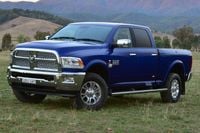
More than 600 Ram 2500 and 3500 pickups are being recalled for an issue affecting their brakes, but a remedy isn't available just yet.
2 Hours Ago
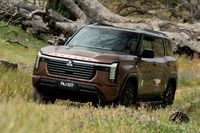
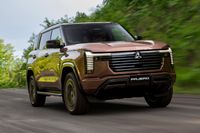
We've driven it in Japan, and it's now time to hit the trail on home soil to see whether the new Pajero can uphold the reputation of the nameplate.

Journalist
Journalist
Journalist
Journalist
If this is the car for you, we’ll compare offers from trusted dealers, handle the back and forth and manage your purchase from enquiry to delivery.
The new Mitsubishi Pajero hype train keeps on rolling.
We're tantalisingly close to the official Australian launch of the fifth-generation Pajero, which Mitsubishi still expects to happen just in time for Christmas.
We drove it in Japan the day after its global reveal in early September, albeit only briefly on-road at a proving ground, so now it's time to drive it on Australian soil for the first time.
'Soil' is the key word there – Mitsubishi still only has pre-production models on the ground locally, and media aren't allowed to drive them on public roads. That means our first local off-road drive impressions remain limited.
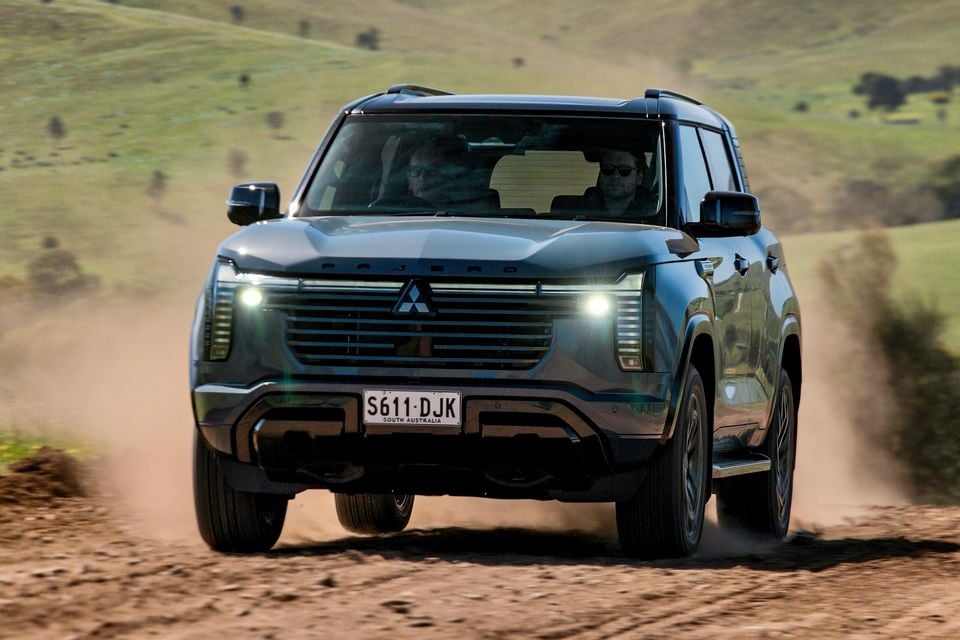
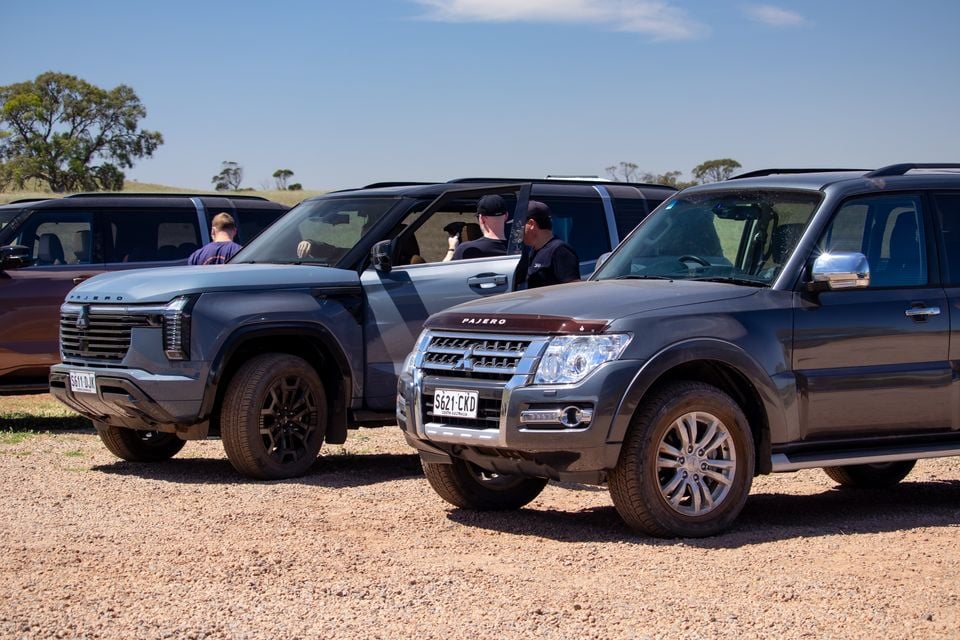
The Japanese auto brand invited motoring media including CarExpert to sample the new Pajero at the Eagle View 4WD Park outside Adelaide for a quick off-road preview. Only two Pajero GSR flagships were on hand to drive, but they were bolstered by a pair of Triton utes and a previous-generation Pajero for reference – two very useful yardsticks to measure Mitsubishi's new flagship SUV against.
The Pajero-Pajero link is obvious, but the Pajero-Triton relationship is slightly less so if you haven't been keeping up with Mitsubishi's slow-release reveal campaign. If that's the case, here's a quick refresher.
Unlike the ladder-frame reinforced monocoque construction of the previous two Pajero iterations, the new model is a body-on-frame SUV utilising a heavily modified version of the Triton's ladder-frame chassis. Mitsubishi says this was chosen to balance off-road capability and on-road comfort, but it was presumably also cheaper than developing an all-new platform – unibody or otherwise.
Of course, it has a different body and interior, and it's powered by an updated single-turbo version of the Triton's 2.4-litre bi-turbo diesel engine. All that may sound more Pajero Sport than Pajero, but Mitsubishi is adamant this big new off-road SUV deserves one of the Japanese brand's best-known nameplates.
So let's find out if it does.
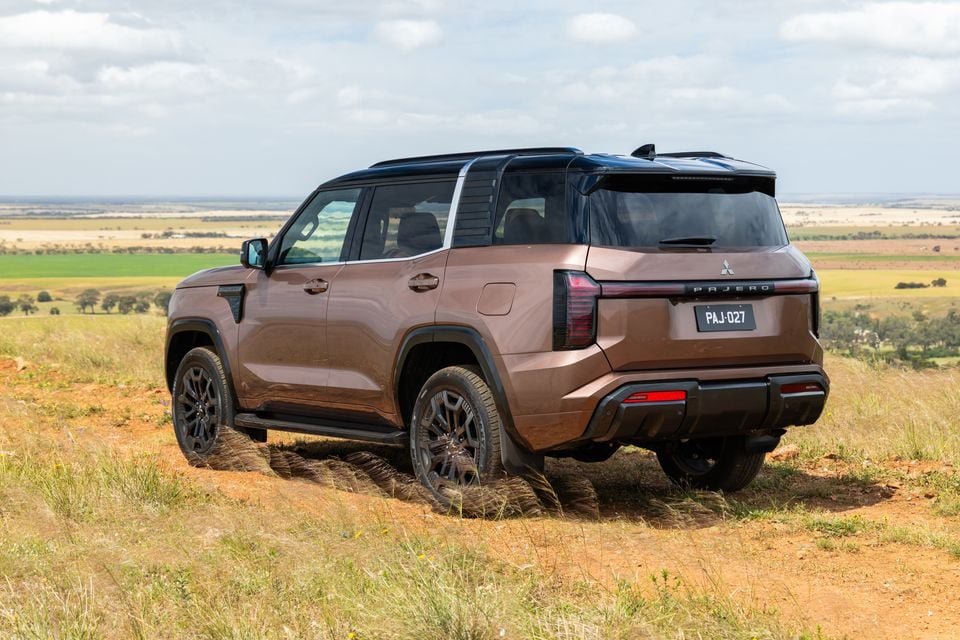
Positioned as Mitsubishi's new flagship SUV, the Mk5 Pajero is priced towards the top of the mainstream large off-road SUV segment, starting at $68,490 before on-road costs.
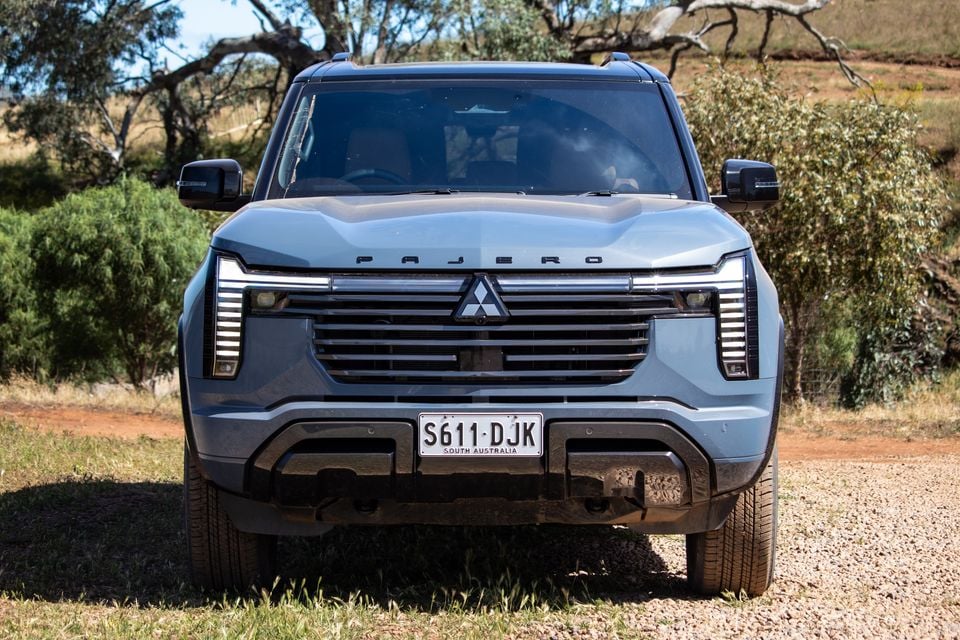
| Model | Price before on-road costs |
|---|---|
| 2027 Mitsubishi Pajero GLS 5-seat | $68,490 |
| 2027 Mitsubishi Pajero GLS 7-seat | $69,990 |
| 2027 Mitsubishi Pajero Exceed | $79,990 |
| 2027 Mitsubishi Pajero GSR | $84,990 |
The base five-seat GLS is slightly pricier than the cheapest five-seat Ford Everest with full-time four-wheel drive, and both are way more expensive than the most affordable four-wheel drive Isuzu MU-X. But the base Toyota Prado is still far more expensive than them all.
However, things change at the top of the lineup. The Pajero GSR costs more than the flagship Everest Platinum, which is priced at $82,917 plus ORCs, and much more than the flagship MU-X at $77,100 plus ORCs. The Prado Kakadu exceeds all of them by a sizeable margin, priced above $100,000.
It's also worth mentioning the new diesel GWM Tank 500, which currently tops out at $71,990 drive-away.
For further context, the top-spec previous-generation Pajero Exceed Final Edition was priced at $63,490 before on-road costs in 2021, or roughly $76,000 in today's money, adjusted for inflation.
To see how the Mitsubishi Pajero stacks up against the competition, check out our comparison tool
Pajero nameplate and history aside, this cabin is a huge step forward for Mitsubishi.
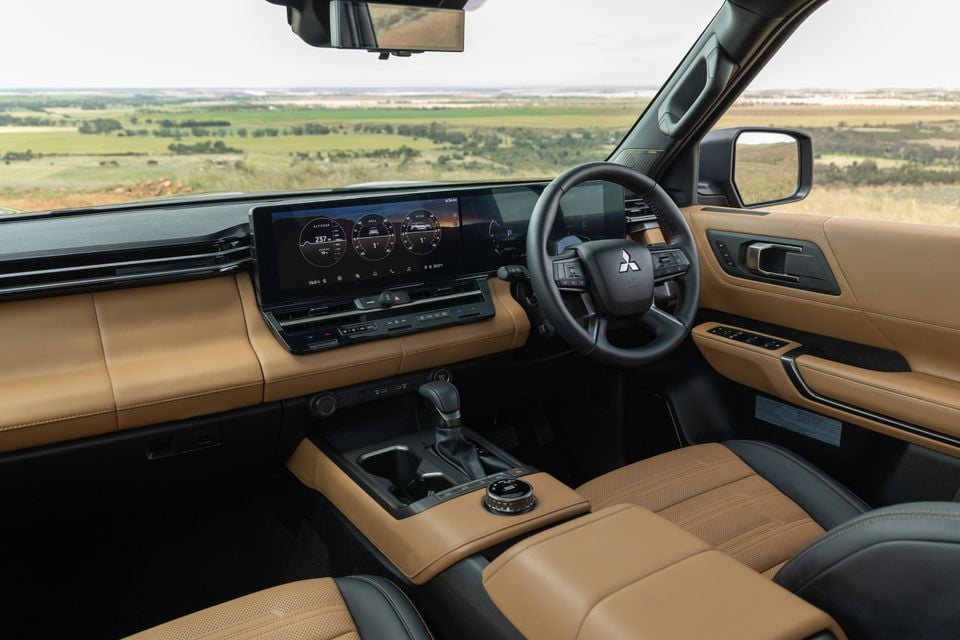
The pictures really don't do it justice, because from the moment you hop in, the proportions feel spot-on. Even the slabby dashboard and huge touchscreens don't feel overly imposing or garish.
This is clearly the start of a new era for Mitsubishi interior design, even if it has a near-identical steering wheel to the older Outlander. Overall, however, the new Pajero's cabin is very much its own thing; it isn't a Triton, and it certainly isn't a Pajero Sport.
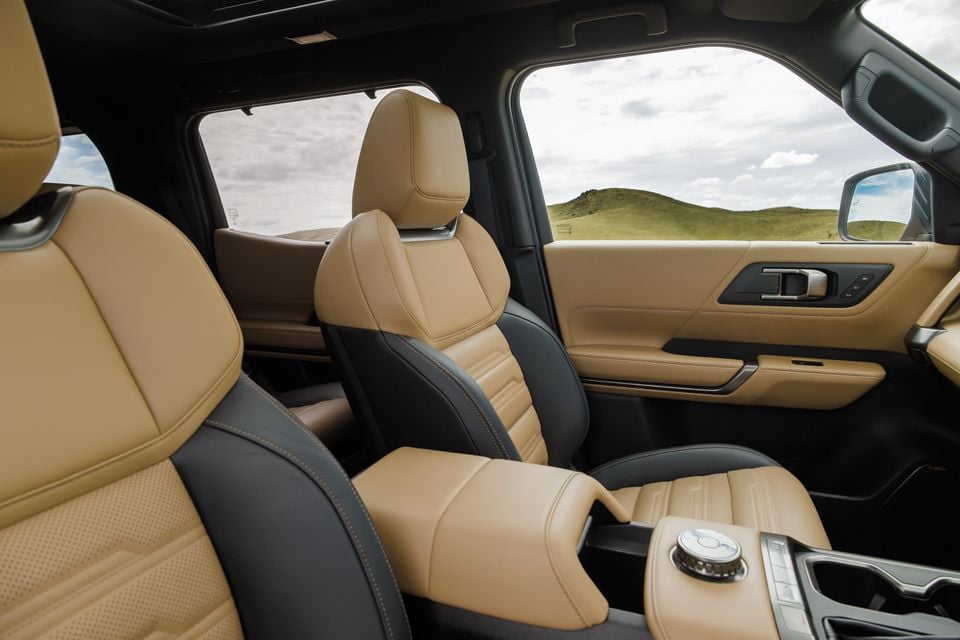
That said, it's obviously still a Mitsubishi cabin. Its design is largely utilitarian, but softened just enough to feel welcoming – whether its synthetic leather surfaces and minimal glossy panels will hold up to genuine off-road abuse remains to be seen.
There are two main areas worth praising. One is build quality, because even in these pre-production cars, creaks and rattles were surprisingly rare. We were also pleased to find that things like the 'PAJERO'-branded grab handles at both ends of the dash – though too far away to reach easily – feel part of the car's core structure. The A-pillar grabs feel more plasticky.
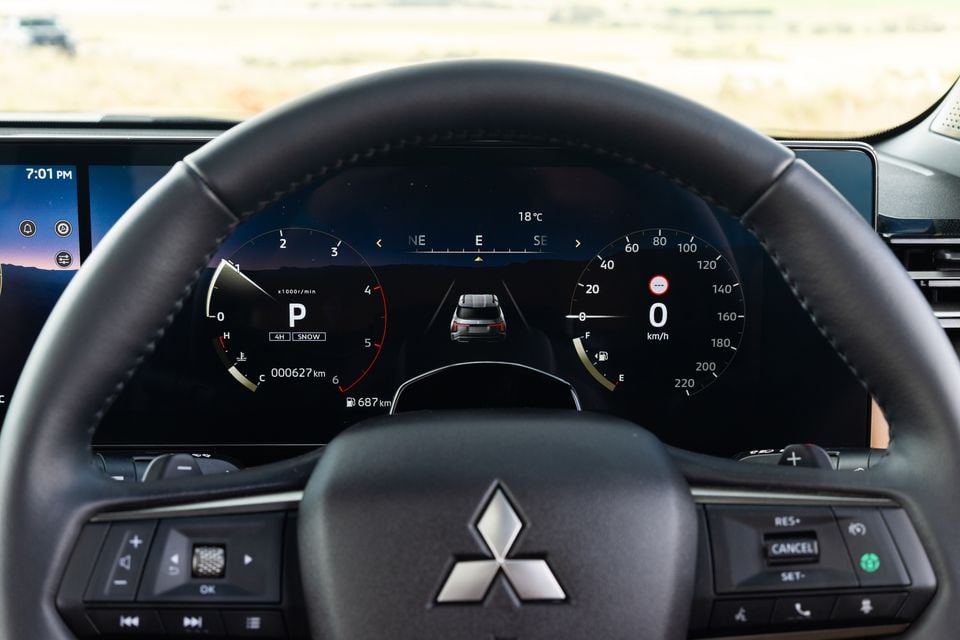
The other topic is tactility. Mitsubishi has always stuck to more button-heavy interior layouts, and despite upping its screen game with the new Pajero, it still has plenty of physical controls for those who prefer a more traditional approach.
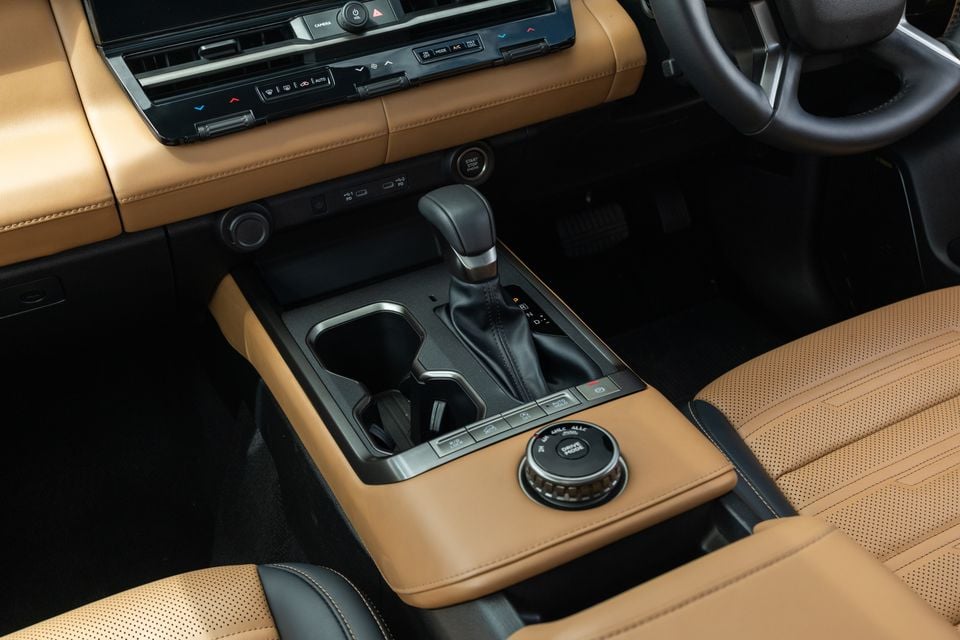
The older-style steering wheel is the most obvious example, but we like what Mitsubishi has done with the climate system and centre console. These areas look far more modern than in the Triton, but their controls remain easy to understand and satisfying to interact with.
There's still a physical gear selector, a huge dial for drive modes and off-road settings, and large buttons for everything else. These utilitarian edges are offset by luxuries like padded armrests, complementing the supremely soft, comfortable seats and leather-appointed finishes.
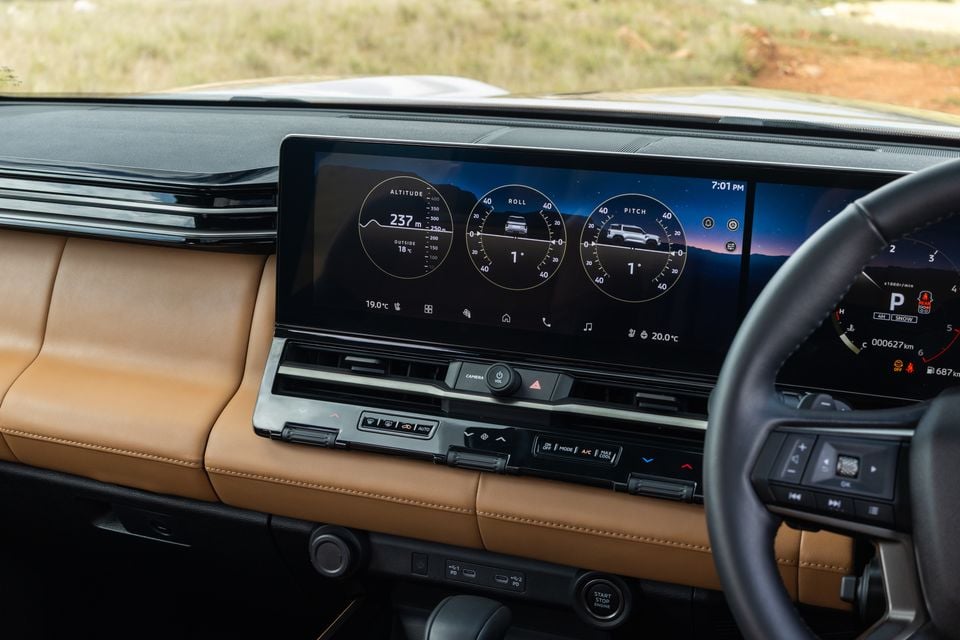
Then come the screens. In keeping with the rest of the cabin, they're far better than what we're used to from Mitsubishi, particularly in terms of graphic quality and responsiveness.
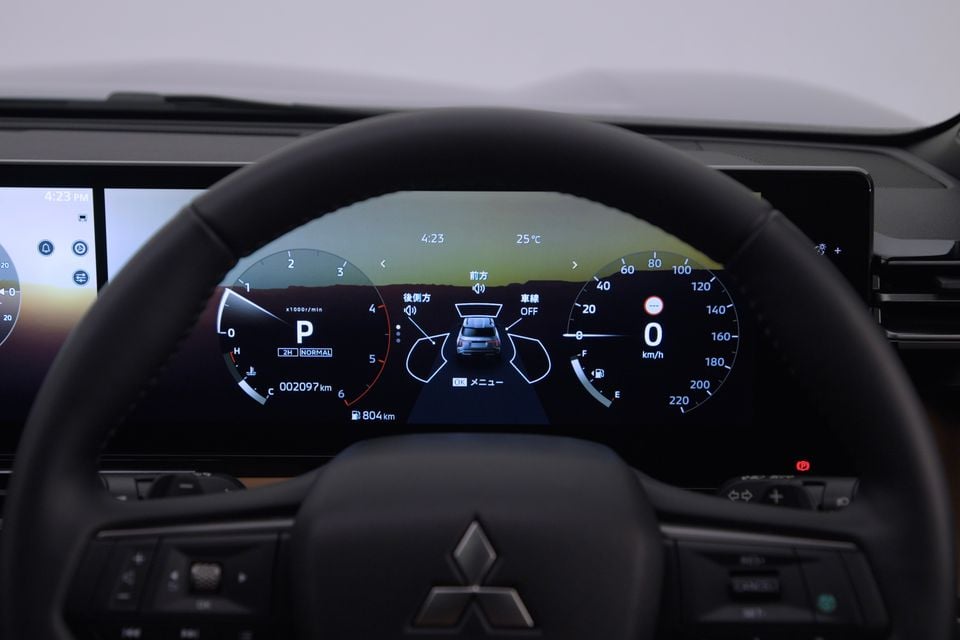
The 14.3-inch digital instrument display you see here is the larger of the two available for the Pajero, and it maintains the brand's established graphic identity while greatly improving versatility; there are so many layouts and informative widgets to flick through.
The 14.3-inch touchscreen in the middle, however, is the real highlight. It isn't at all laggy, with a high resolution that makes interactions impressively easy. And yes, Mitsubishi's trademark three-dial off-road monitor is readily accessible via a home-screen shortcut.
There are downsides to this new screen setup, though. The biggest is that the two-screen panel is partially blocked by the left-hand side of the steering wheel, although not to the same extent as we've seen in some techier SUVs.
Additionally, its physical integration isn't particularly slick, and there are quite a few menus and widgets to sift through to find items like vehicle settings. It's also the only way to toggle steering wheel heating and seat heating/ventilation where fitted.
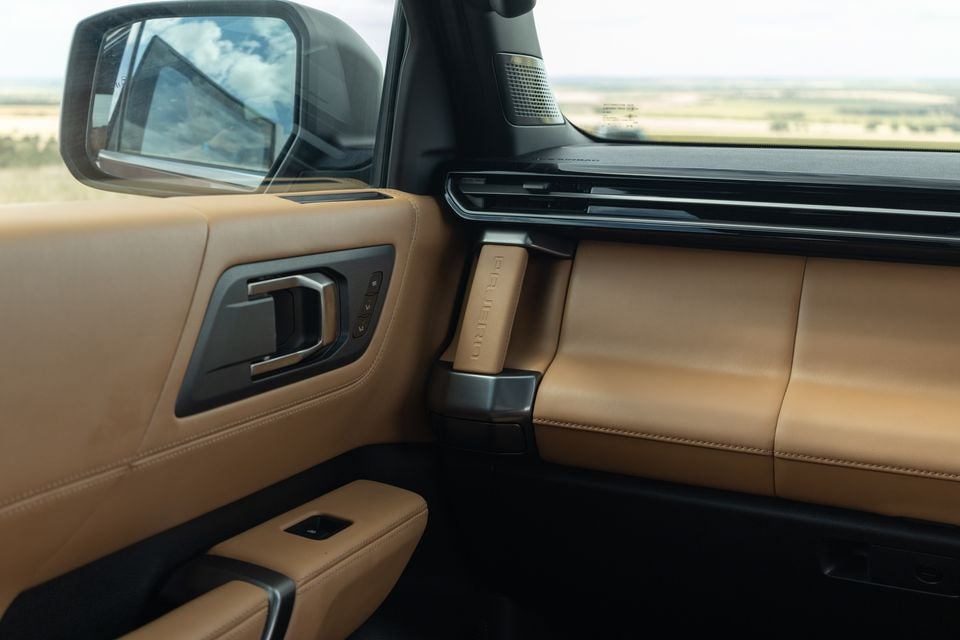
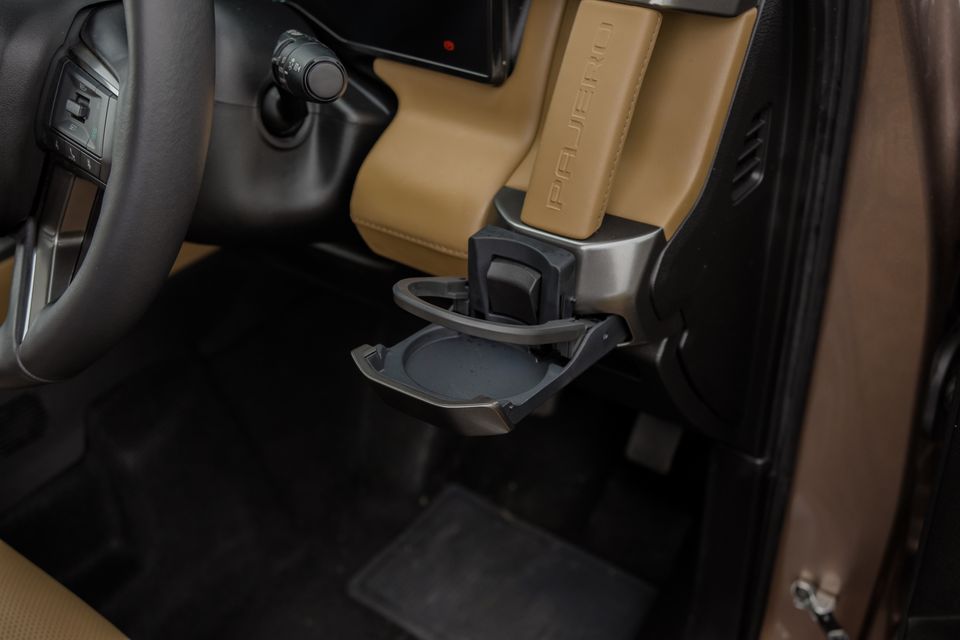
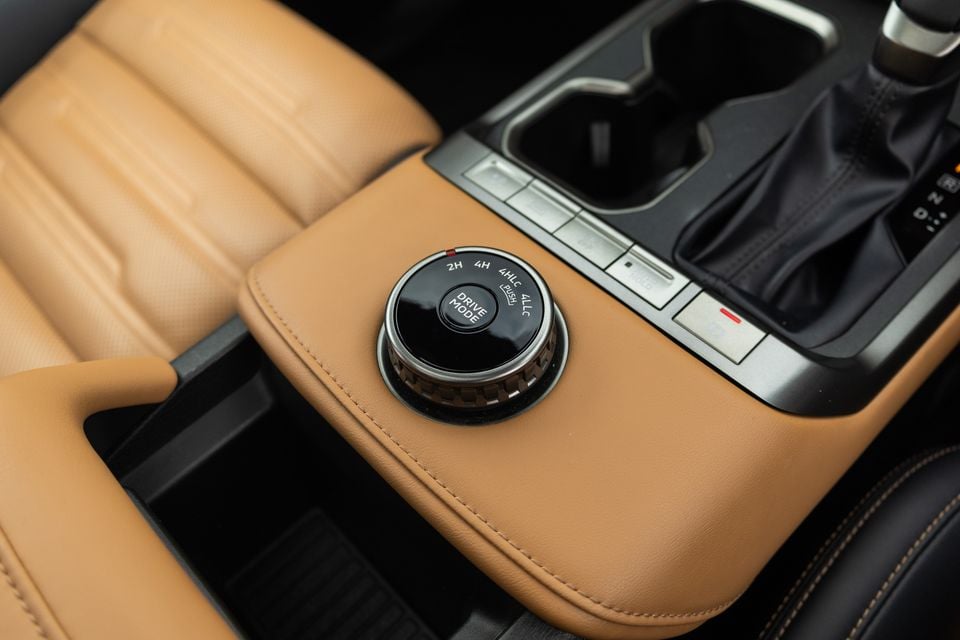
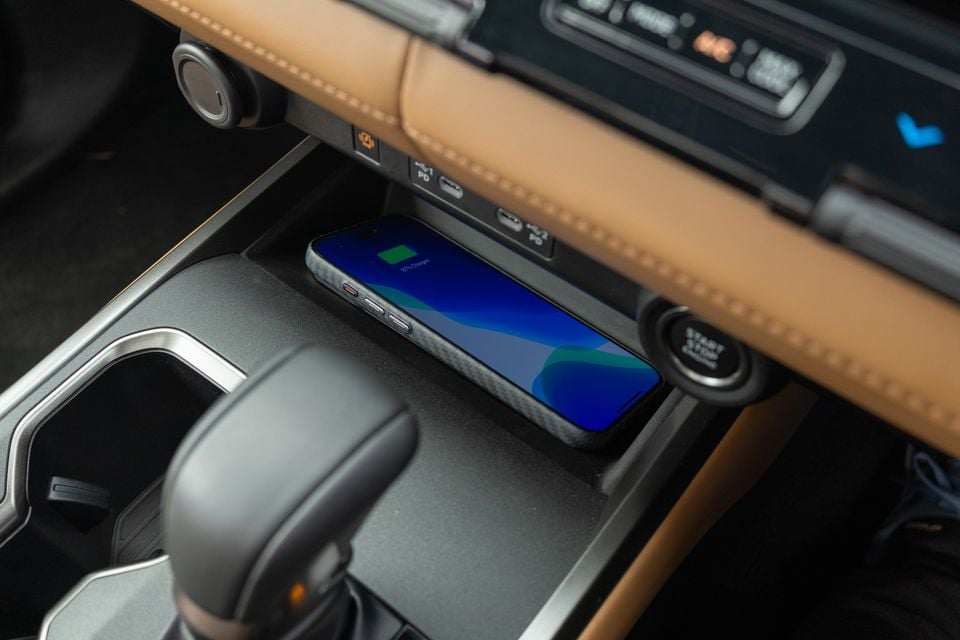
But all said, the front of the Pajero's cabin is mighty impressive. It's true that it doesn't have much in common with the previous model's interior, but given the latter was fundamentally an interior from 2006, that shouldn't be all that surprising.
In fact, one of the new Pajero's greatest strengths is cabin storage. Places to put things are plentiful and practical throughout.
There's a two-tier passenger-side glovebox, cupholders that pop out of the dashboard, large cupholders and a tray on the centre console, a refrigerated centre storage box, a tidy wireless phone charger under the centre stack, and oversized door bins. It's all very well considered.
That sentiment continues to the second row. The front seatbacks alone house multi-tier map pockets, USB-C ports, and provisions for device holders, while there's also a fold-down centre armrest with more pop-out cupholders.
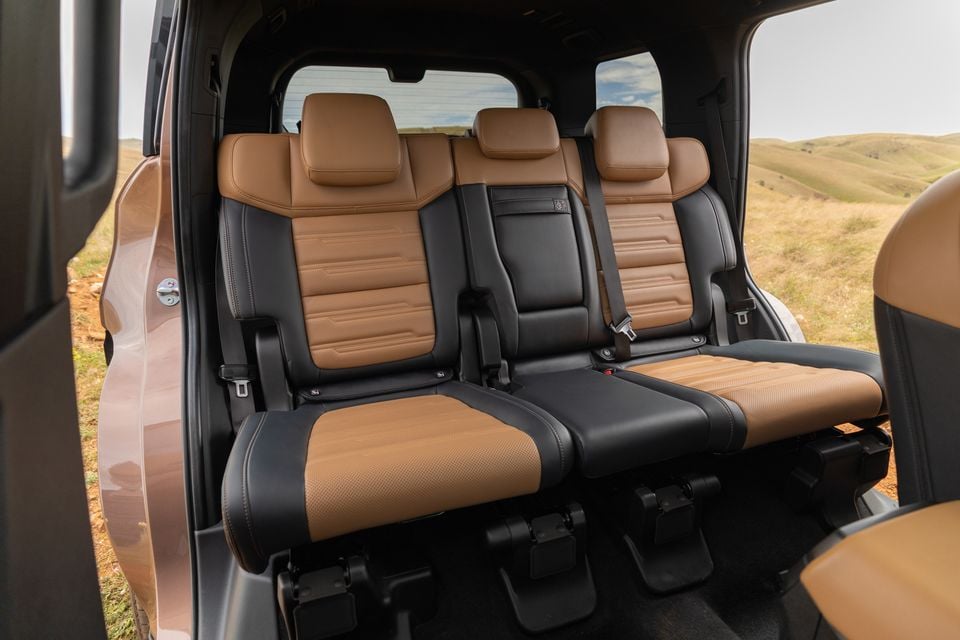
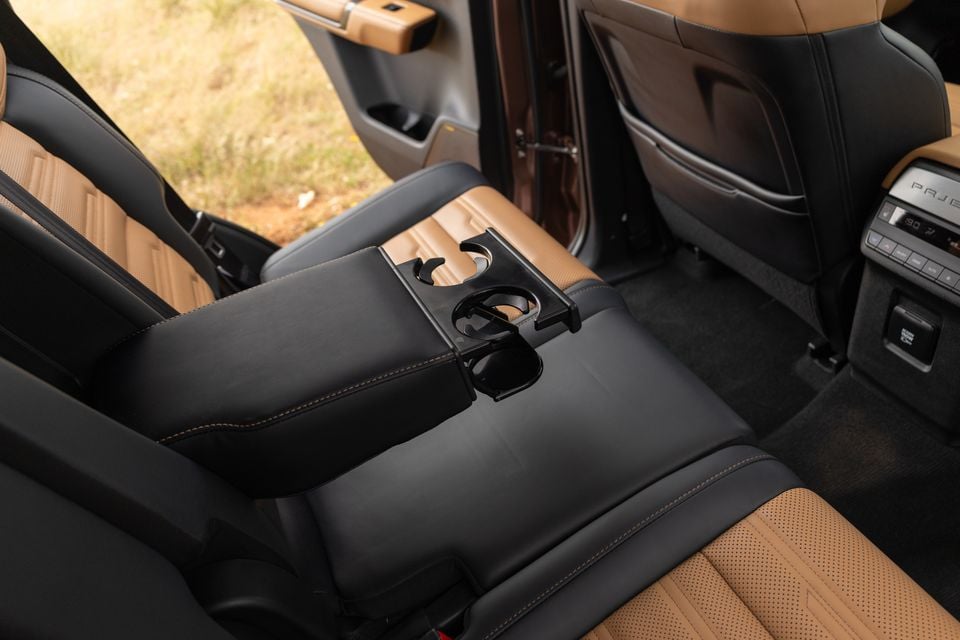
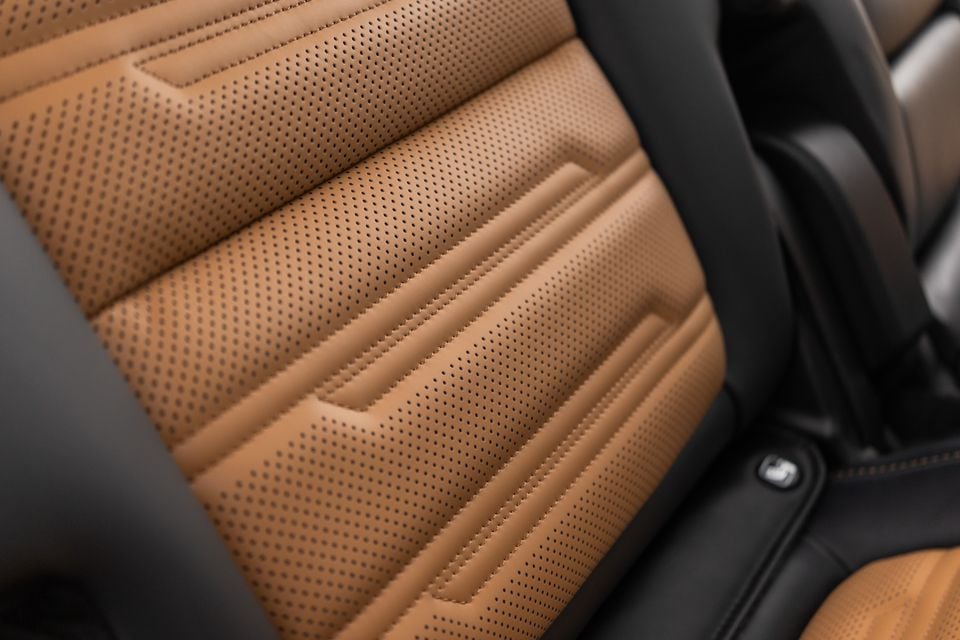
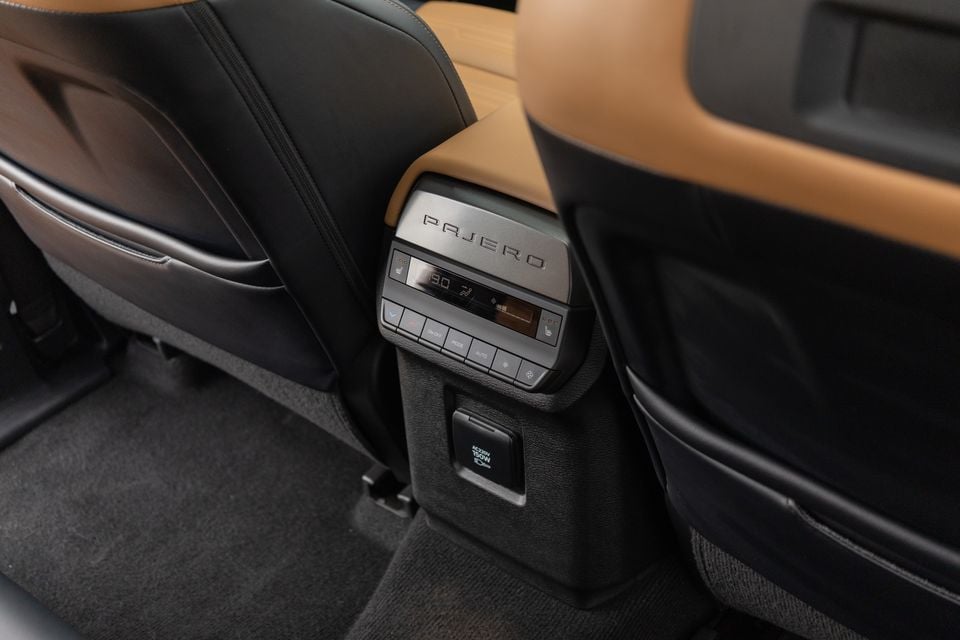
But the best part about the second row is how spacious it is. There's no shortage of legroom, and the ability to slide the bench seat forward or backward by 150mm allows you to maximise second- or third-row space as needed. You also have a fair bit of recline adjustment to play with.
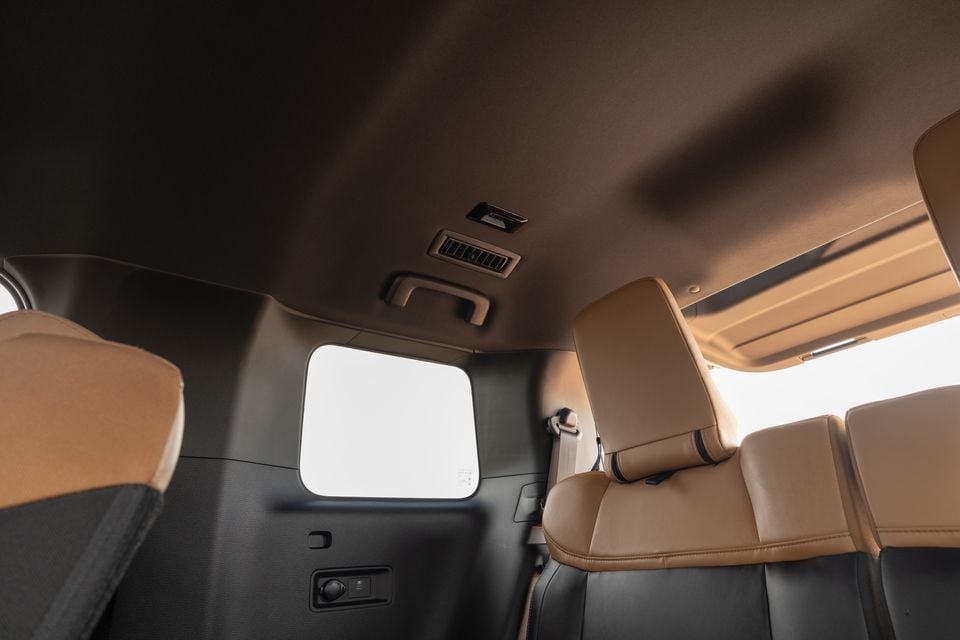
The GSR's sunroof, however, eats into headroom, something that'll likely become apparent if you're of above-average height. At least there's a powered sunshade to keep occupants from roasting under the Aussie sun, and all three rows get effective overhead air vents.
Tumbling the outboard second-row seats forward grants generous space for ingress and egress to the third row. Once back here, I was surprised to find that, at 173cm, I wasn't at all cramped.
We credit this to that second-row sliding function, which allows you to open up third-row legroom if you're carrying adults. It's also good to have two USB-C ports and cupholders back here, but the seats themselves are very firm and flat – not great for long drives.
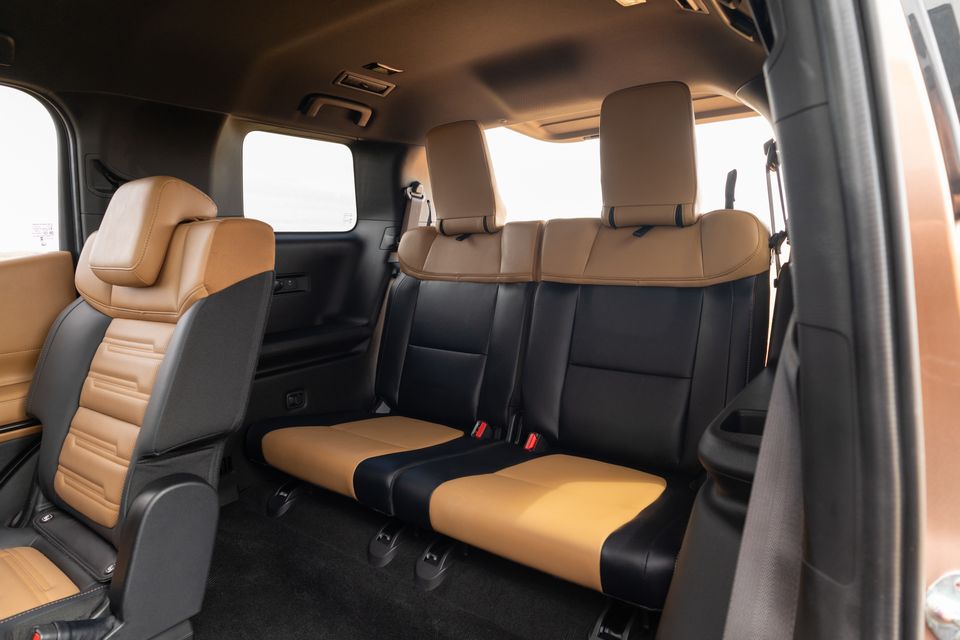
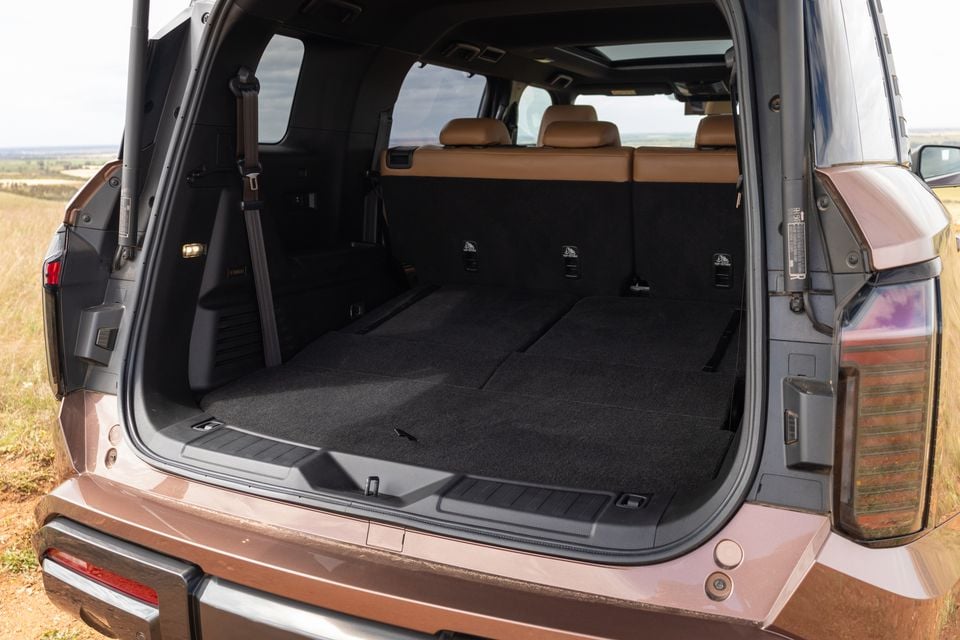
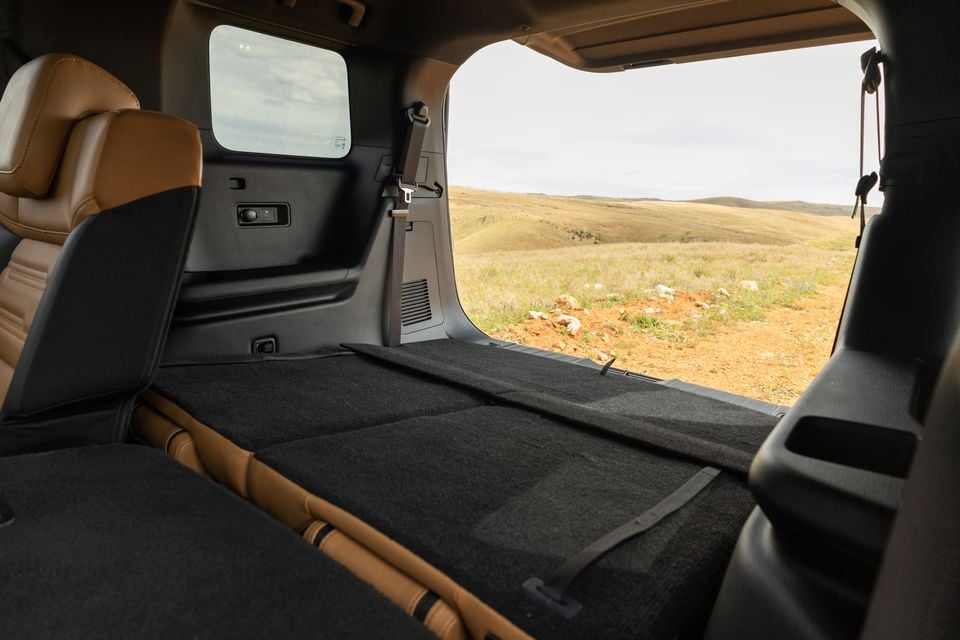
A power tailgate is standard for all Australian-delivered Pajeros, and boot space is generous. Cargo capacity in both five- and seven-seat configurations is appropriately spacious, though the former is understandably slightly more accommodating.
The third row in seven-seat variants (all but the entry-level GLS) tucks away nicely to create a flat but sloping floor, and they also get an extra bit of under-floor storage at the very rear of the load area. With the third row stowed, boot space feels comparable to that of an MU-X or an Everest.
And it goes without saying that the Pajero's boot is far more practical than the clumsy arrangement in the Prado, even if that's a low bar.
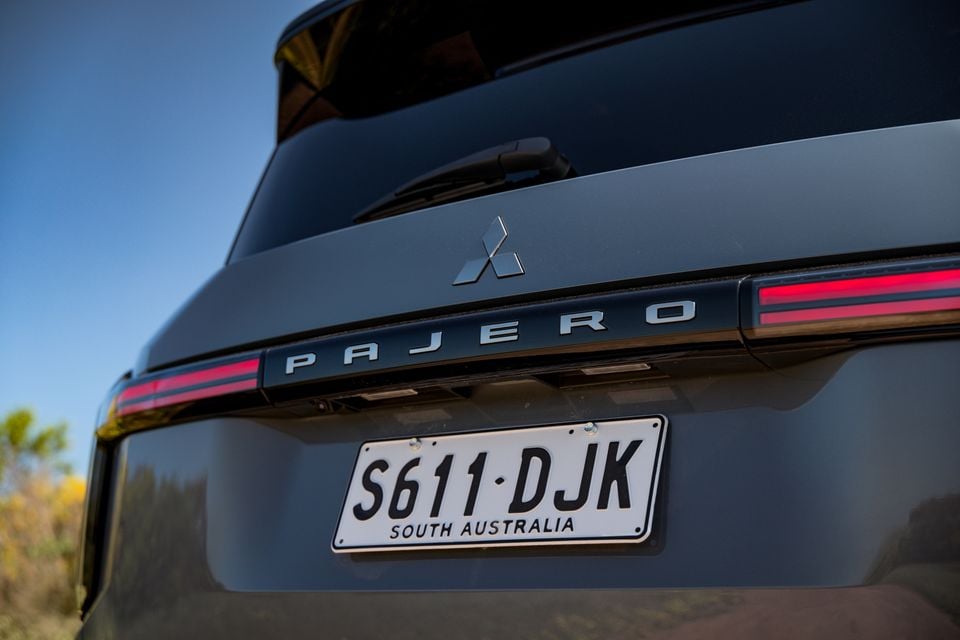
Pajero fans are quick to point out that the new model loses the iconic tailgate-mounted spare wheel, which is a shame, but at least there's still a full-size alloy – it's just moved under the rear of the vehicle.
| Dimensions | Mitsubishi Pajero GSR |
|---|---|
| Length | 4920mm |
| Width | 1925mm |
| Height | 1910mm |
| Wheelbase | 2870mm |
| Cargo capacity (VDA) | 131L – all seats up 502-519L – 3rd row folded 1561L – 2nd and 3rd rows folded |
To see how the Mitsubishi Pajero stacks up against the competition, check out our comparison tool
This is arguably the closest link between the Pajero and Triton: a 2.4-litre four-cylinder turbo-diesel engine producing 150kW of power and 480Nm of torque. The most significant differences are that the Pajero is single-turbo rather than bi-turbo, and has an additional 10Nm of torque.
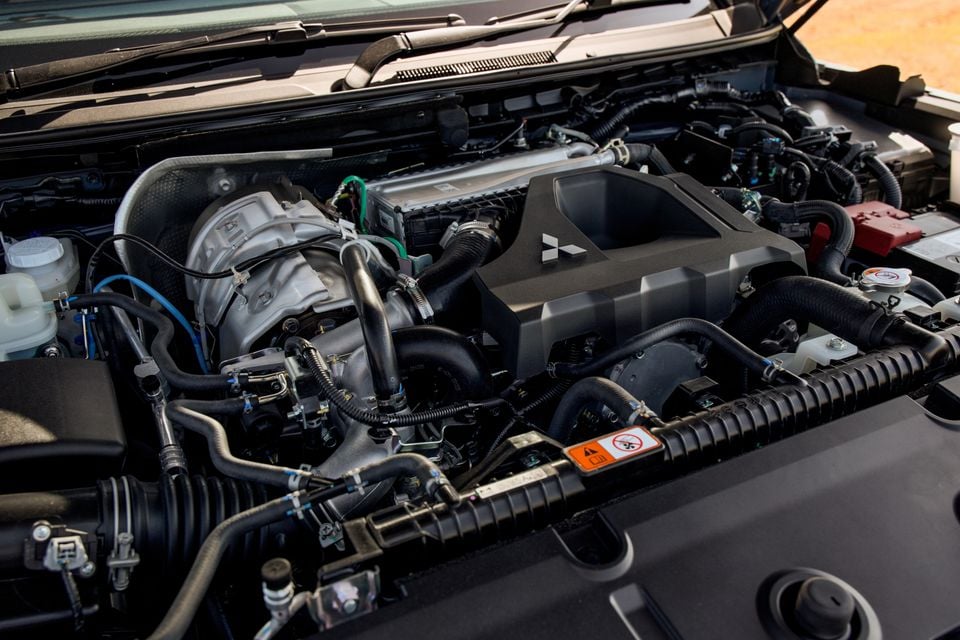
| Specifications | Mitsubishi Pajero |
|---|---|
| Engine | 2.4L 4cyl turbo-diesel |
| Power | 150kW |
| Torque | 480Nm |
| Transmission | 8-speed auto |
| Drive type | ‘Super Select II’ full-time four-wheel drive |
| Fuel economy (claimed) | 7.1L/100km – GLS 7.2L/100km – Exceed, GSR |
| CO2 emissions (claimed) | 188g/km – GLS 190g/km – Exceed, GSR |
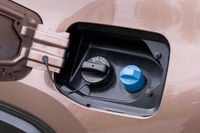
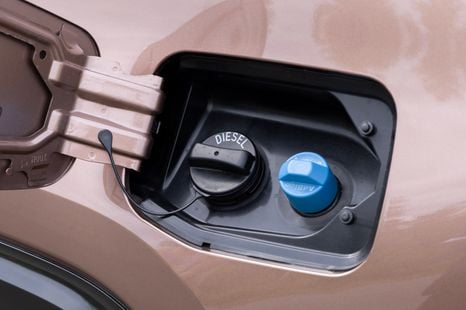
| Fuel tank | 80L 19.1L – AdBlue |
| Kerb weight | 2397kg – GLS 5-seat 2432kg – GLS 7-seat 2481kg – Exceed 2513kg – GSR |
| Payload | 818kg – GLS 5-seat 783kg – GLS 7-seat 734kg – Exceed 702kg – GSR |
| Braked towing capacity | 3500kg |
| Gross vehicle mass (GVM) | 3215kg |
| Gross combination mass (GCM) | 6340kg |
| Emissions standard | Euro 6d |
Like the Triton, however, the Pajero is equipped with Mitsubishi's Super Select II 4WD system, comprising 2H, 4H, 4HLc and 4LLc settings. The latter two engage the centre differential lock, while 4LLc also activates low-range gearing.
This all goes through an eight-speed automatic transmission, up from the Triton's six, but the same as the old Pajero Sport.
Unlike the MU-X (but like the Prado and Everest V6), the Pajero can be driven in 4WD on sealed surfaces. It also features a locking rear differential, controlled via a button on the centre console, but no front locker.
Given we only drove the Pajero off-road for roughly 30 minutes, we don't yet have a representative real-world fuel economy figure. That said, we saw figures around 14.0L/100km on the car's trip computer after that low-speed off-roading.
To see how the Mitsubishi Pajero stacks up against the competition, check out our comparison tool
Our first drive of the new Pajero took place on an off-road loop, which involved neither technical rock-crawling nor a representative mix of everyday driving. Half an hour behind the wheel isn't a huge amount of time, and this review will reflect that.
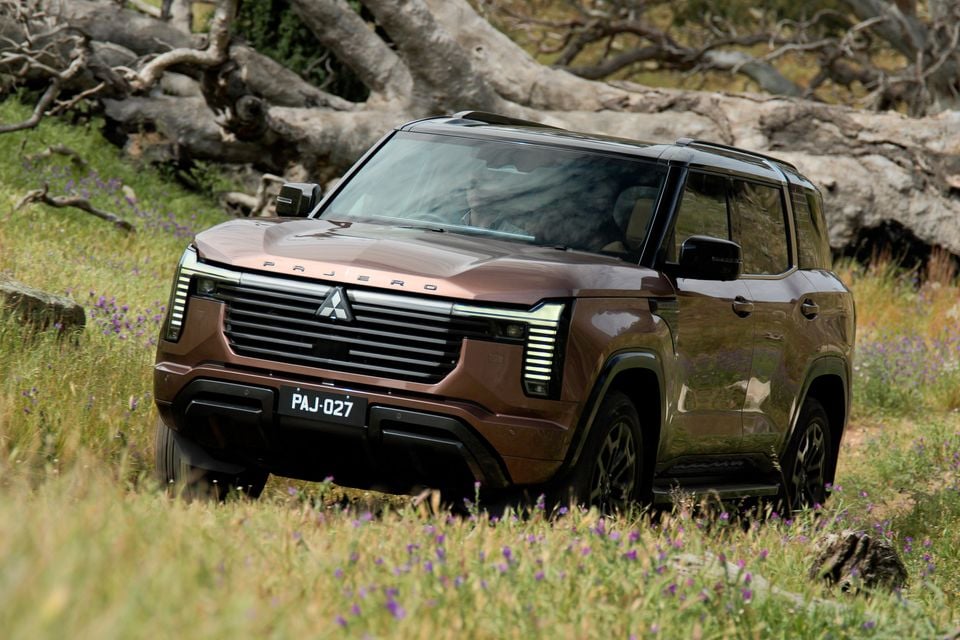
But importantly, we had the rare opportunity to drive the new Pajero back-to-back with its predecessor, providing some worthwhile perspective. First and foremost, the size difference takes some adjusting to.
Dominating your view out the windscreen is the huge clamshell bonnet, a stark departure from the flat, sloping bonnet on the old Pajero. This gives the big SUV a real sense of substance, and you have a much clearer understanding of how much car is in front of you.
Outward visibility in all directions remains strong, and you can fall back on a comprehensive array of camera views if you're ever unsure of your surroundings. This system isn't perfect, though – we'll get to that in a moment.
Complementing the extra size are vast improvements in body control and refinement. The new SUV has a real tank-like character, shrugging off smaller rocks and imperfections with far greater composure than the old one, while also feeling far less jittery than the Pajero Sport.
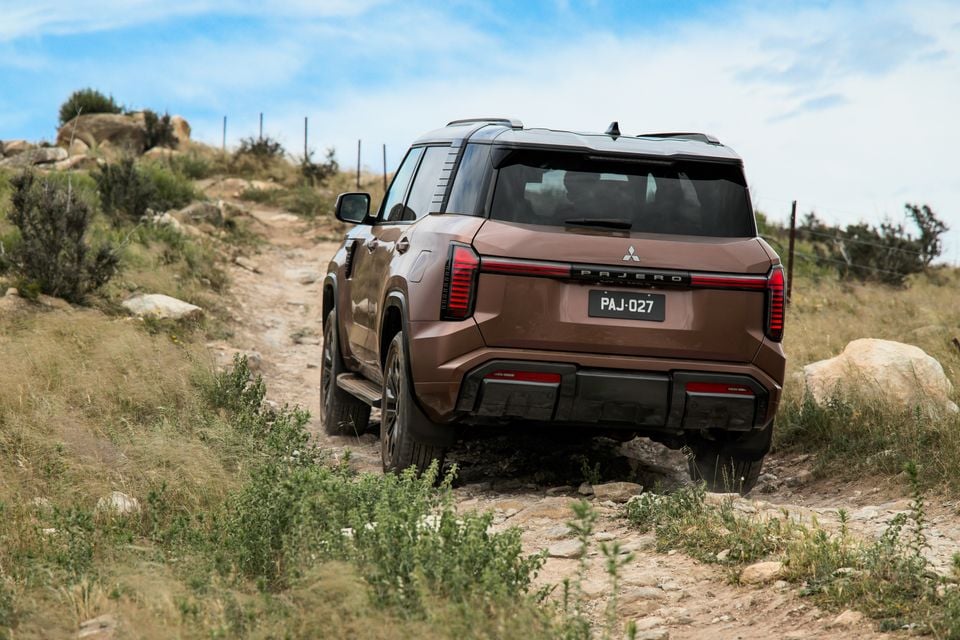
The ladder-frame construction is still evident in the minor shudders through the body and minor steering column shock over sharp bumps, but it generally feels much more civilised than you might expect, and therefore more 'Pajero' than not.
Again, everything feels rock-solid here. The doors close with a satisfying thud, offset bumps and dips don't cause any interior plastics to creak, and there's a robust quality to it all.
Then there's the refinement. Compared to the Triton, the 2.4-litre single-turbo diesel is significantly quieter here, not to mention much smoother and far less clattery. It's certainly no powerhouse, but that's far less of an issue on the trail than it is on the road.
In a similar sense, the eight-speed auto is remarkably well-behaved. There were no nonsensical shifts or indecisiveness when crawling at low speed; it simply went about its job without making itself known. Paddle shifters are also on hand if needed.
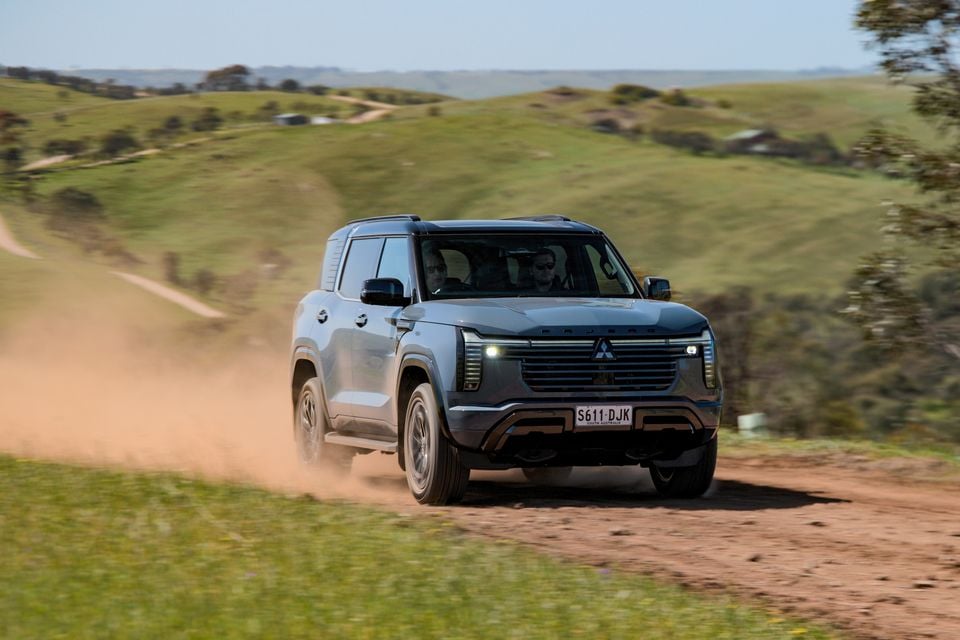
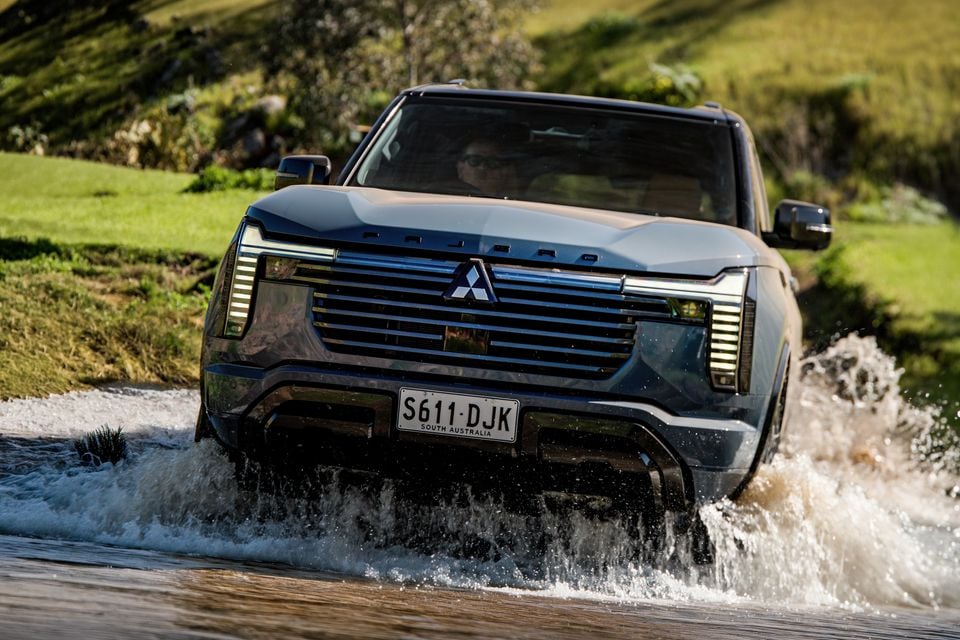
When it comes to off-road capability, the Pajero benefits greatly from its Triton roots. We already know Mitsubishi's ute can easily hold its own on the trail, and we're pleased to find that slightly more compliant suspension hasn't compromised the Pajero.
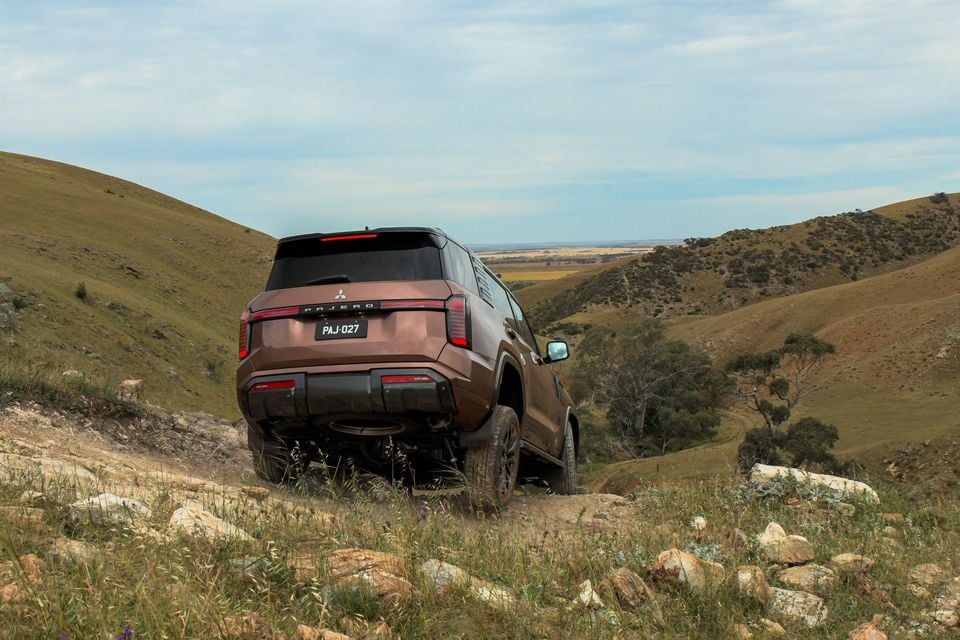
In the loose-ish, rocky off-roading we tackled at Eagle View, the Pajero was never out of its comfort zone. Steady throttle openings had it trucking on through without hesitation, and its traction control was very good at actively managing wheel slip, even on highway tyres.
While the old Pajero could also do the exact same trail without issue, the new one feels more advanced. The traction control operates more smoothly, the power delivery is more effortless, and brake pedal pressure is far easier to accurately gauge.
In some ways, though, the Pajero has lost some of its fun factor. The longer wheelbase makes it feel far more stable, particularly on steep inclines, and therefore easier to drive, but there's a lot less body movement, and it requires a bit less effort from the driver.
If this is the car for you, we’ll compare offers from trusted dealers, handle the back and forth and manage your purchase from enquiry to delivery.
That's to be expected as technology improves, but it's still worthwhile context. In fact, the most significant difference is the steering, because compared with the more sophisticated – if subdued-feeling – electric system in the new car, the old Pajero's hydraulic steering feels like you're piloting a wooden ship in a storm.
Fortunately, the new model still has a fairly slow steering ratio, which makes delicate inputs easier. This is usually a telltale sign of a vehicle's off-road intent and it allows a vehicle to retain some old-school charm, however faint that impression may be in the new Pajero.
Still, we remain impressed with the Pajero's off-road prowess. A big part of that is its Super Select II 4WD system, providing great versatility in drivetrain behaviour depending on the terrain ahead.
Spinning the dial on the centre console makes switching between any of the four 4WD modes a breeze, though you will have to select Neutral to enter low-range, naturally.
Selecting 4HLc or 4LLc also automatically activates the camera's front under-floor view, while low-range unlocks the dedicated 'Rock' drive mode. Unfortunately, the camera's resolution is poor, making it difficult to place the vehicle precisely.
We hope this is a pre-production thing and not a lasting trait of this $85,000 flagship SUV.
Other small quibbles include occasional scraping from the Pajero's robust side steps, and the time it sometimes takes to engage or disengage low range. There's also no front differential lock, but the selectable centre and manual rear lockers should suffice for most.
All in all, we're cautiously optimistic about the Pajero. As expected, it's good on the rough stuff, and there are very clear improvements in noise, vibration and harshness levels, but there are still significant unknowns when it comes to its on-road behaviour. Time will tell.
| Off-road dimensions | Mitsubishi Pajero GSR |
|---|---|
| Track front and rear | 1630mm |
| Ground clearance | 228mm |
| Approach angle | 30.4º |
| Departure angle | 25.8º |
| Ramp breakover angle | 22.6º |
| Wading depth | TBC |
To see how the Mitsubishi Pajero stacks up against the competition, check out our comparison tool
At launch, the Mitsubishi Pajero will be available in three variants.
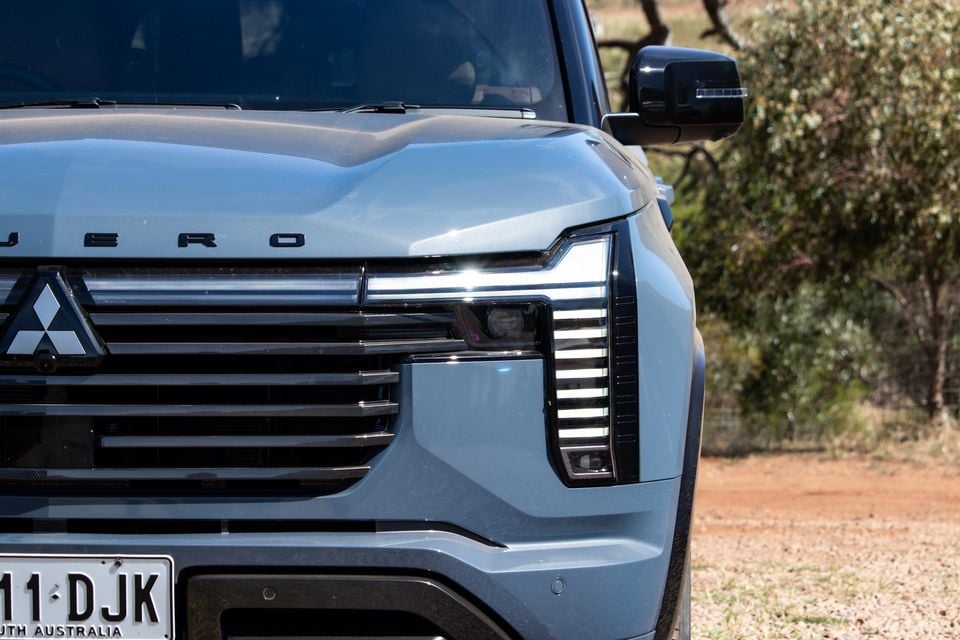
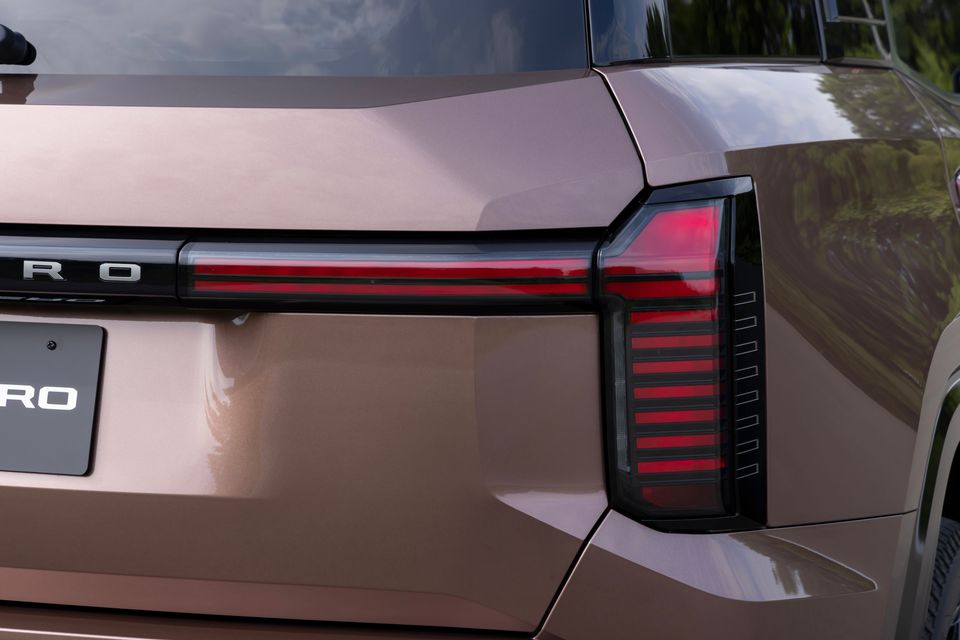
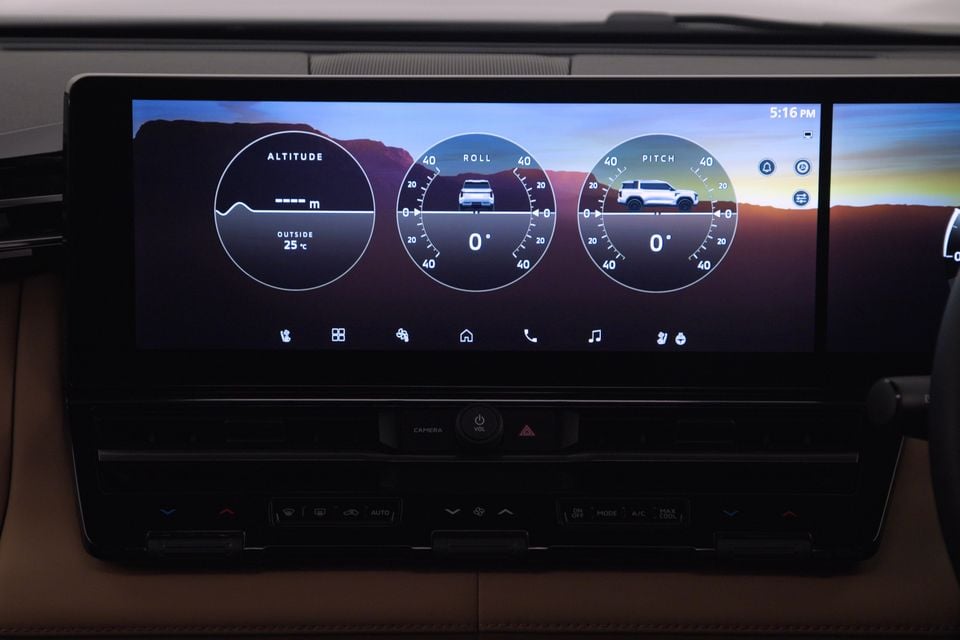
2027 Mitsubishi Pajero GLS equipment highlights:
Pajero Exceed adds:
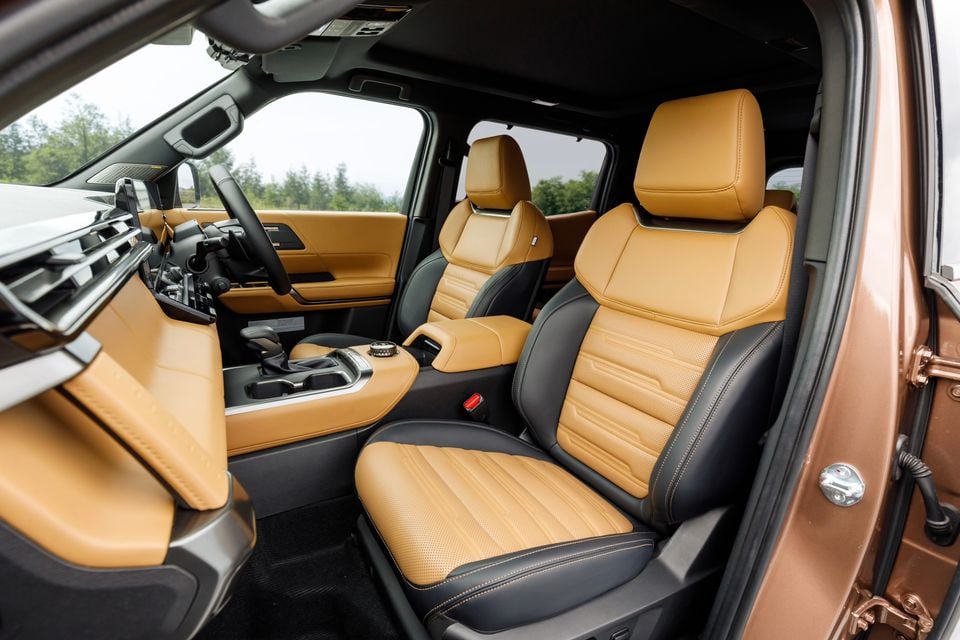
Pajero GSR adds:
To see how the Mitsubishi Pajero stacks up against the competition, check out our comparison tool
The fifth-generation Mitsubishi Pajero has yet to be crash-tested by ANCAP and is therefore unrated.
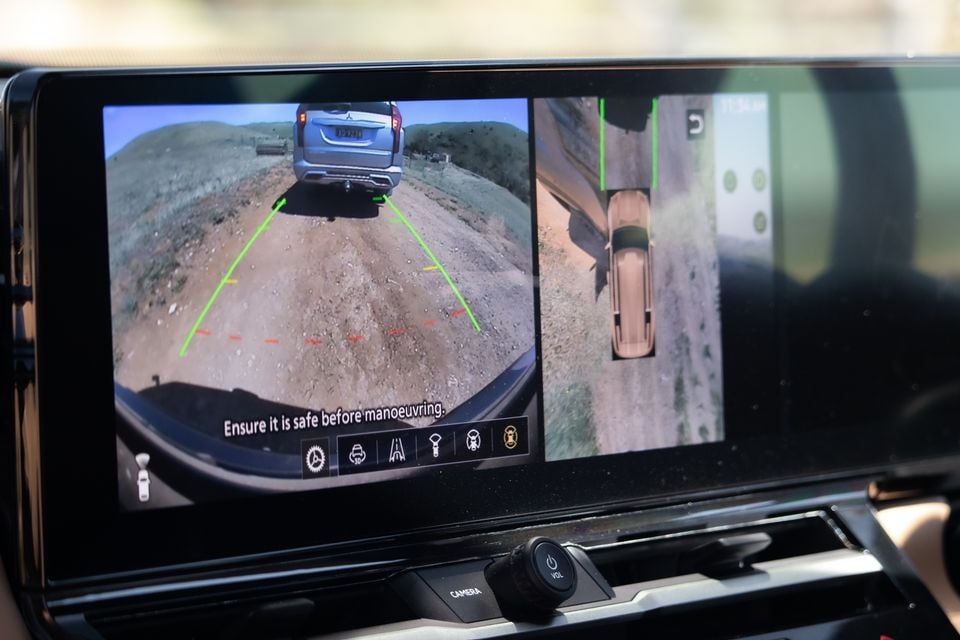
Standard safety equipment highlights:
To see how the Mitsubishi Pajero stacks up against the competition, check out our comparison tool
The 2027 Mitsubishi Pajero is backed by a five-year, 100,000km standard warranty, which can be extended by 12 months or 20,000km every time the SUV is serviced on time at a Mitsubishi dealer, up to the 10-year/200,000km mark.
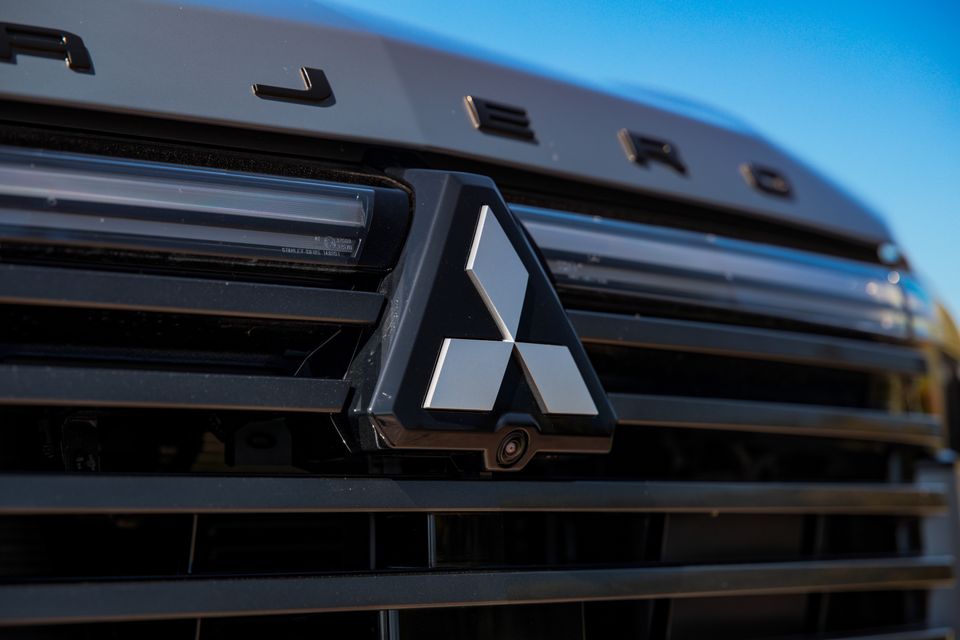
| Servicing and Warranty | Mitsubishi Pajero |
|---|---|
| Warranty | 5 years/100,000km, service-activated up to 10 years/200,000km |
| Roadside assistance | 10 years (service-activated) |
| Service intervals | TBC |
| Capped-price servicing | 10 years |
| Average annual service cost | TBC |
| Total capped-price service cost | TBC |
Mitsubishi Australia has yet to confirm capped-price servicing costs for the new Pajero.
For context, the Triton requires servicing every 12 months or 15,000km, whichever comes first. Capped-price servicing costs are outlined for 10 years, totalling $7023 for an average of $702.3 annually.
To see how the Mitsubishi Pajero stacks up against the competition, check out our comparison tool
So far, so good. If you own an older Pajero and are at all interested in moving to the new one, we'd strongly suggest you take it for a test drive – we doubt you'll be disappointed.
Our first impressions in Japan of its strong noise suppression, considerably more refined engine, and general comfort remain true now that pre-production cars have arrived in Australia, and it's clear that Mitsubishi isn't phoning this one in.
The new Pajero's interior is the real highlight. It's spacious, impressively comfortable, has loads of storage capacity, and finally brings Mitsubishi into the modern age tech-wise without going over the top. In our opinion, it's a far more car-like cabin than you'll see in many other ladder-frame SUVs.
There are still some negatives, though. As good as it is off-road, its engine is merely adequate, if not underwhelming, and it's certainly not cheap.
But after five years of waiting, we're very keen to drive the new Pajero at length on Aussie roads.
CarExpert can save you thousands on a new Mitsubishi Pajero. Click here to get a great deal.
Click the images for the full gallery
MORE: Explore the Mitsubishi Pajero showroom
Editorial Disclosure
CarExpert attended this event as a guest of Mitsubishi.
If this is the car for you, we’ll compare offers from trusted dealers, handle the back and forth and manage your purchase from enquiry to delivery.
Mitsubishi Pajero
Mitsubishi Pajero Sales rolling 12-months#
*Based on VFACTS and EVC data
Looking for complete Mitsubishi Pajero price history?
Our Mitsubishi Pajero Pricing Page shows exactly how prices have changed over time.
2027
$74,032
2027
$86,107
2027
$91,357
Max Davies is a CarExpert journalist with a background in regional media, with a passion for Japanese brands and motorsport.
Add CarExpert as a Preferred Source on Google so your search results prioritise writing by actual experts, not AI.
William Stopford
2 Hours Ago

Alborz Fallah
3 Hours Ago

Damion Smy
4 Hours Ago
Alborz Fallah
5 Hours Ago
Max Davies
7 Hours Ago
Max Davies
7 Hours Ago
Add CarExpert as a Preferred Source on Google so your search results prioritise writing by actual experts, not AI.
# Based on VFACTS and EVC data
† Displayed prices are based on the drive-away price of the vehicle, which includes delivery charges, registration fees, number plates, and applicable road taxes, based on a Sydney location. However, prices may vary between states and territories, and additional costs such as compulsory third party (CTP) insurance, dealer delivery fees, and optional extras are not included. These prices are subject to change without notice and may not reflect current market pricing or dealer offers.
 Automotive Vehicle Spec Data & 4K images Powered by JATO Dynamics Ltd