William Stopford
Ram 2500 and 3500 recalled
More than 600 Ram 2500 and 3500 pickups are being recalled for an issue affecting their brakes, but a remedy isn't available just yet.
3 Days Ago
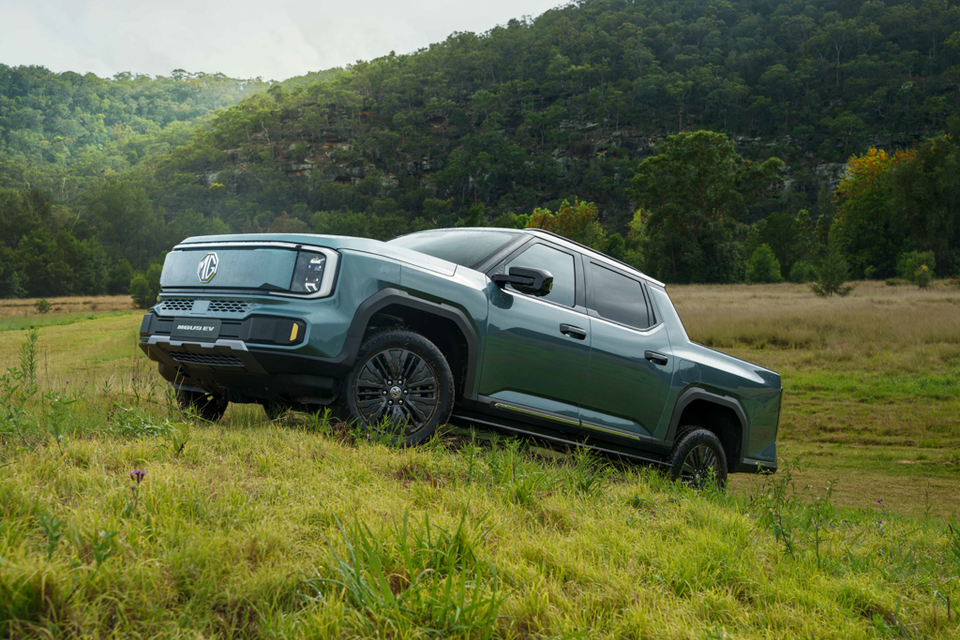
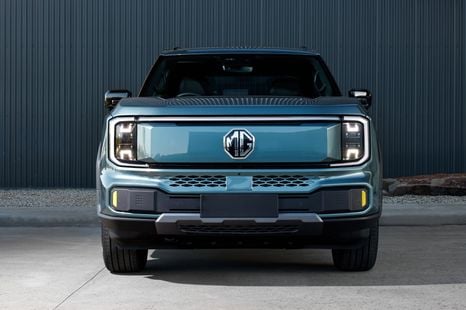
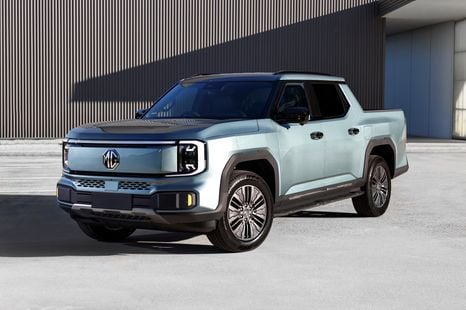
Electric utes have struggled to gain traction in Australia, but MG's new dual-cab EV has the tools to buck the trend – if only it wasn't so pricey.

Deputy Road Test Editor
Deputy Road Test Editor
Deputy Road Test Editor
Deputy Road Test Editor
If this is the car for you, we’ll compare offers from trusted dealers, handle the back and forth and manage your purchase from enquiry to delivery.
Aussie fuel – and particularly diesel – prices are through the roof, and ute owners are among those hardest hit.
The timing seems fitting, then, for a new electrified option to arrive Down Under. Especially when that vehicle is the MG U9 EV, which, as the name suggests, is a fully electric vehicle (EV), meaning you can forget about servo stops altogether.
Now, that's all well and good, but there are quite a few reasons why EVs account for less than one per cent of Australian ute sales, and the number of examples available here so far can be counted on less than one hand.
Electric utes have traditionally been less capable and less versatile than their combustion-powered counterparts, unable to keep up with hard-working Aussies who play even harder. That aside, they've just been too damn expensive.
But at least on paper, the U9 EV changes the script somewhat. It'll travel further on a charge than any battery-powered ute before it, and can tow like the best of them – electric or otherwise. MG says it'll go off-road, too.
And all for the price of an arm, rather than an arm and a leg.
Is that enough for MG to spearhead a ute rEVolution? To find out, we headed to rural New South Wales for a curated first drive encompassing country roads, light off-roading, and towing.
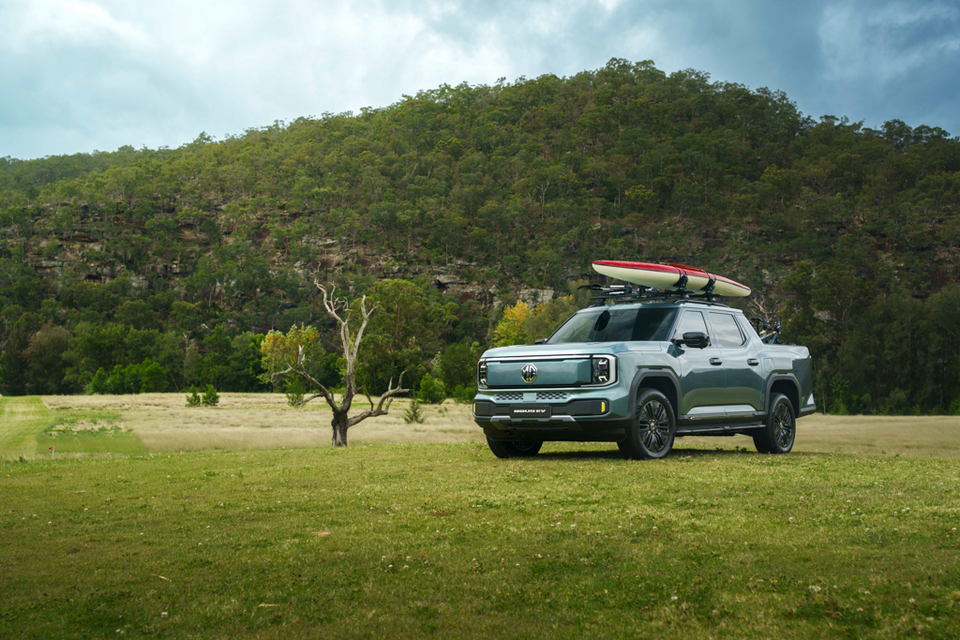
MG is targeting the upper end of the ute market with the U9 EV, priced at $78,990 before on-road costs.
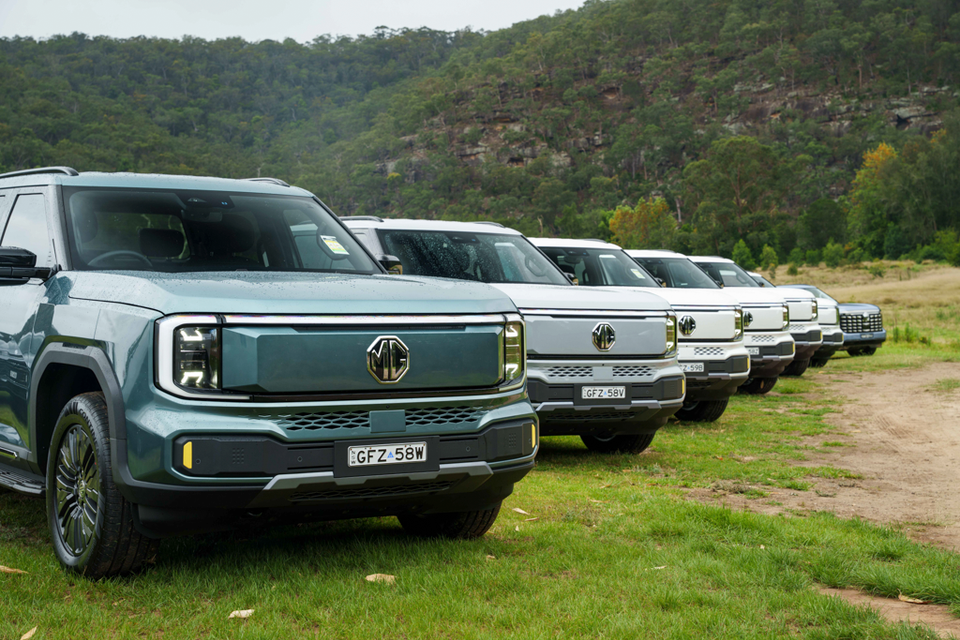
| Model | Price before on-road costs |
|---|---|
| 2027 MG U9 EV | $78,990 |
That's around $22,000 more than the flagship diesel-powered U9 Explore Pro, putting it on par with some of the most expensive versions of Australia's top-selling diesel dual-cabs.
However, U9 EV buyers are more likely to cross-shop electrified dual-cab alternatives, including the fully electric Toyota HiLux BEV. It's priced at $76,490 plus on-roads for the SR, and $82,990 plus ORCs for the flagship SR5.
The smaller, car-based KGM Musso EV, meanwhile, undercuts both the MG and Toyota, with drive-away pricing ranging from $60,000 to $64,000.
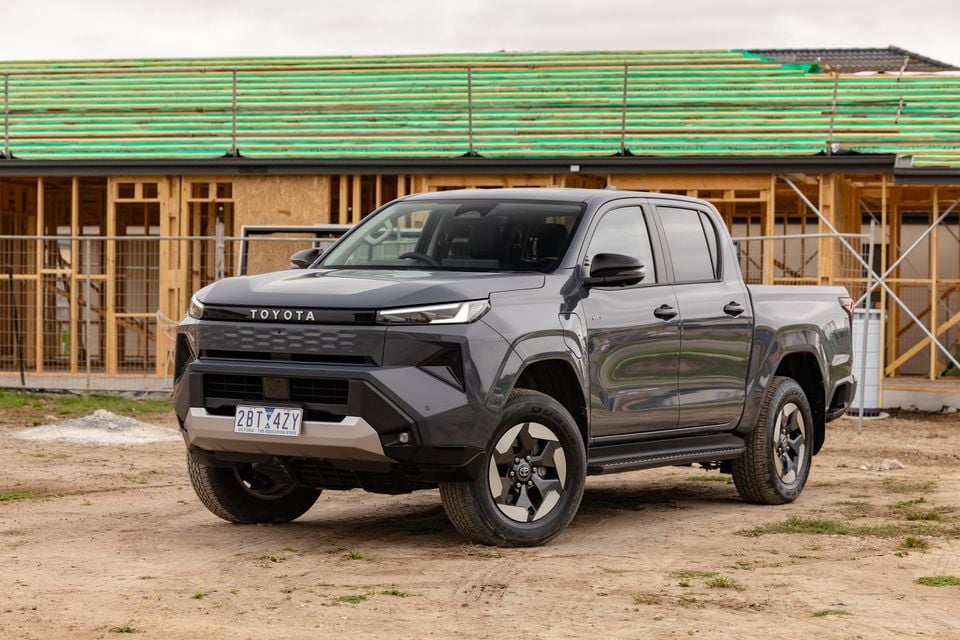
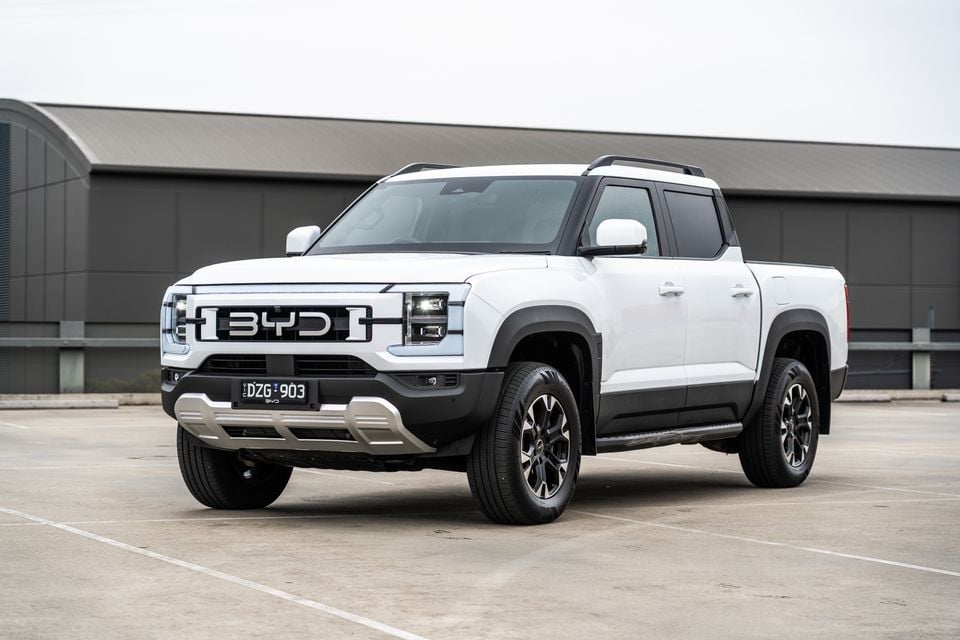
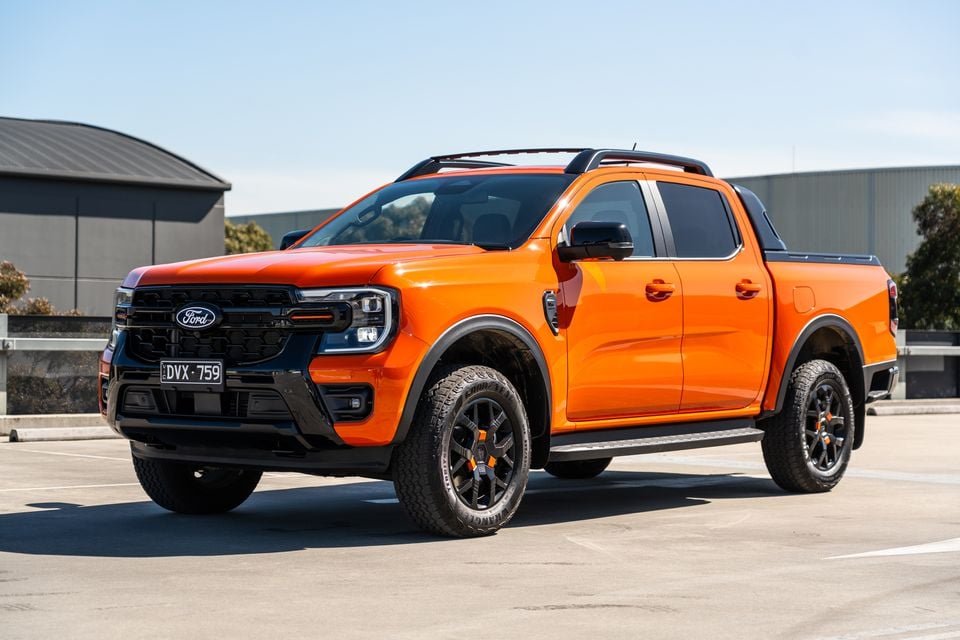

For similar money, buyers can also consider plug-in hybrid (PHEV) dual-cab alternatives such as the BYD Shark 6 and GWM Cannon Alpha, both of which offer comparable performance, towing capacity and off-road capability to the U9 EV.
The Ford Ranger Hybrid (from $59,000 drive-away) is less impressive on paper, but has the advantage of a well-established nameplate.
To see how the MG U9 EV lines up against the competition, check out our comparison tool
Much like the diesel version, which is to say the U9 EV is one of the most spacious and plush mainstream utes going around.
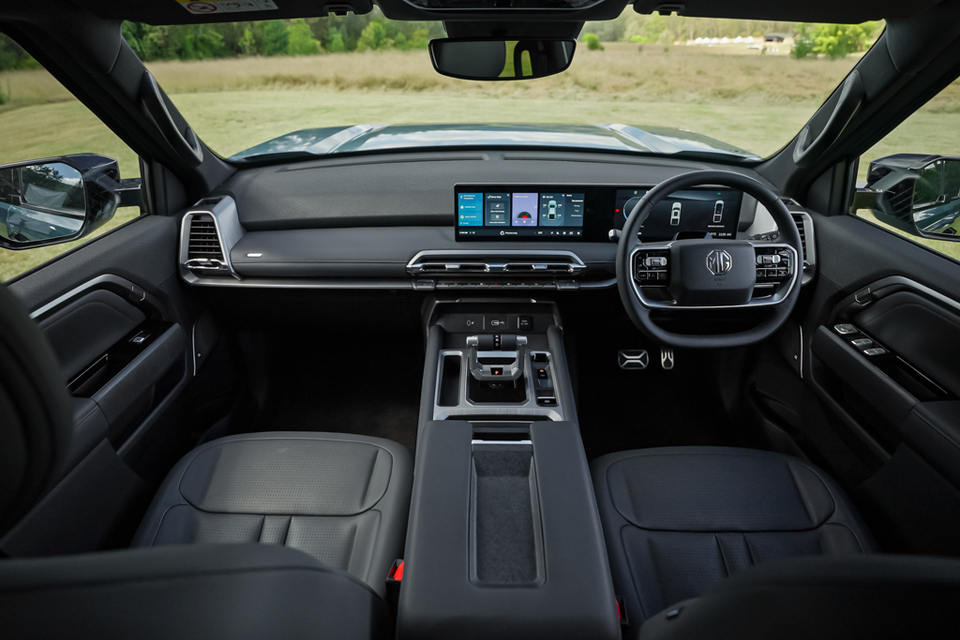
There's less room inside some studio apartments, such is the width of the cabin. Driver and passenger are separated by a comically large centre armrest seemingly plucked straight out of a full-size American pickup, and the same can be said of the front seats.
Trimmed in genuine leather, they're accommodating to broader Aussie body types and highly adjustable, with heating and ventilation functions that promote comfort through all four seasons. The driver can also call upon eight different massage settings, a luxury not afforded by the vast majority of dual-cabs.
Soft-touch finishes throughout the interior further set the U9 EV apart from its peers. Both the dashboard and upper door cards have some give to them, while other high-contact areas are trimmed in synthetic leather.
The result is an upmarket, lounge-like atmosphere reminiscent of the Kia Tasman.
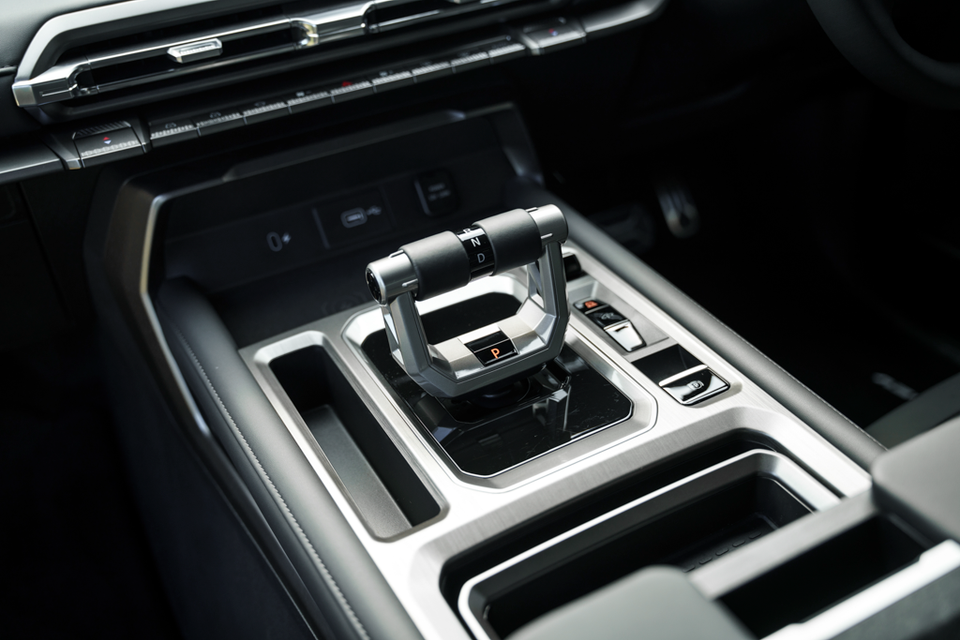
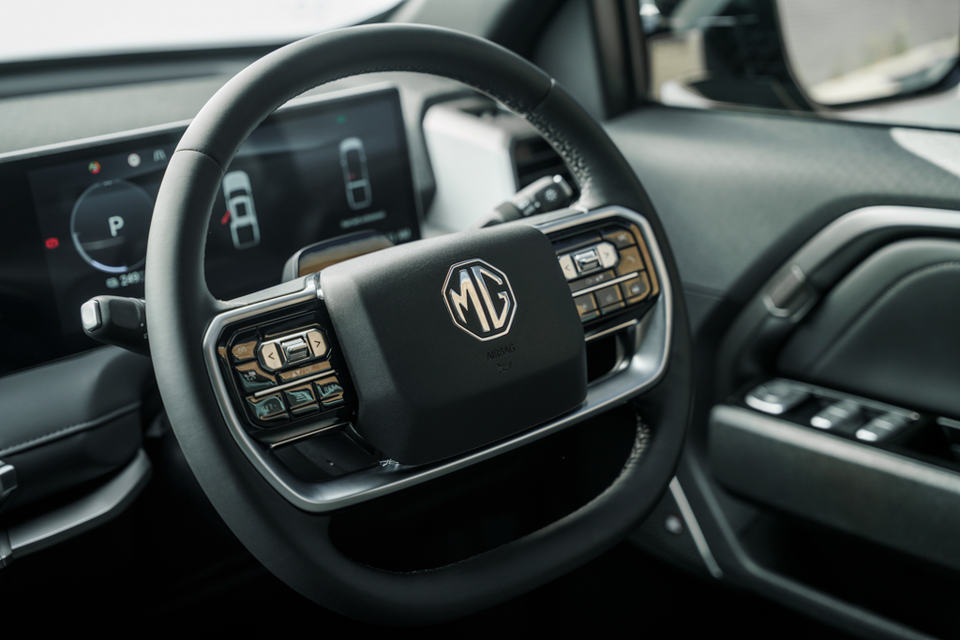
That said, the quality of the switchgear isn't as good as that of the Tasman. Still, the U9 presents and feels better than the likes of the HiLux, Ranger and other mainstays. And so it should, because the EV is among the most expensive utes in its class.
Of course, plush finishes are one thing, but long-term durability is another. A strong first impression means little if the interior falls apart after a few years of hard yakka.
Sure, the U9 EV has been designed for outdoor recreation and family transport rather than hardcore off-roading or heavy commercial use, but it's still likely to see more rough treatment than your average large SUV, and it needs to be able to withstand that. Whether it does, only time will tell.
At least the technology can evolve with the times, as the U9 EV supports over-the-air software updates.
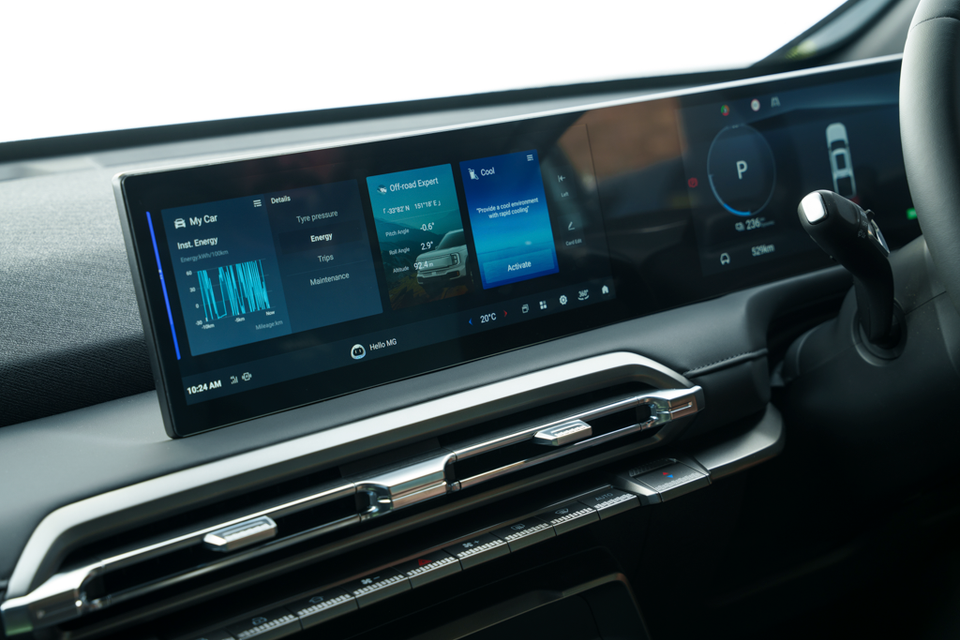
A single dash-mounted panel houses the infotainment system and instrument display, both of which are visually sharp and packed with functionality. The central touchscreen is a little too packed in some respects, as the settings menu is overwhelmingly dense on first inspection. Otherwise it's not too difficult to navigate.
Wireless smartphone mirroring is standard, as is a relatively slow 15W wireless phone charging pad, although you can still connect your device through a choice of USB-A or USB-C outlets.
And you don't need to go rummaging through the touchscreen to complete basic tasks like changing the cabin temperature, which is a relief.
There's no missing the aircraft-style gear lever either – a distinctive piece of design that dominates the centre console. It doesn't look out of place in a vehicle the size of a 747, but takes up valuable real estate that could've been dedicated to storage.
And that's a genuine gripe, because the U9 is surprisingly short on storage options given its enormous dimensions. Clever split-level door bins aside, the available cubbies are underwhelming, and while many modern utes offer a bonus tray above the glovebox, that’s absent here.
To be fair, the 'frunk' and tub more than make up for it.
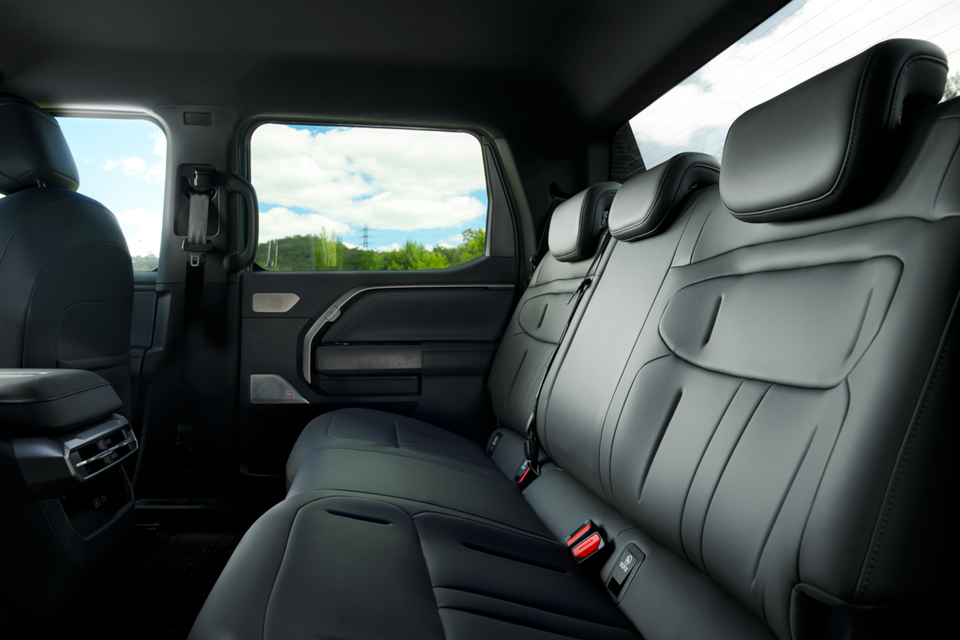
As does the second row. Compared to the diesel U9, the U9 EV has a higher floor by virtue of the huge battery pack underneath, yet there's still ample headroom, legroom, and shoulder room, if not much room to slide your feet under the front seats. Regardless, three adults can sit abreast back there, no dramas at all.
They'll be comfortable, too, as the seating angle is natural and the bench thickly cushioned.
Rear amenities include both USB-A and USB-C outlets, rear-facing air vents, seatback pockets, door bins, and B-pillar grab handles.
But we failed to find a folding centre armrest, and by extension cupholders – a strange spec omission from the diesel model. The EV also loses heating for the outboard rear seats, undermining its credentials as a luxurious lifestyle ute.
And while we're on the subject of missing equipment, gone is the option of MG's Smart Hatch midgate system, which extends the rear cargo area into the cabin by allowing the bulkhead behind the rear seats to fold down.
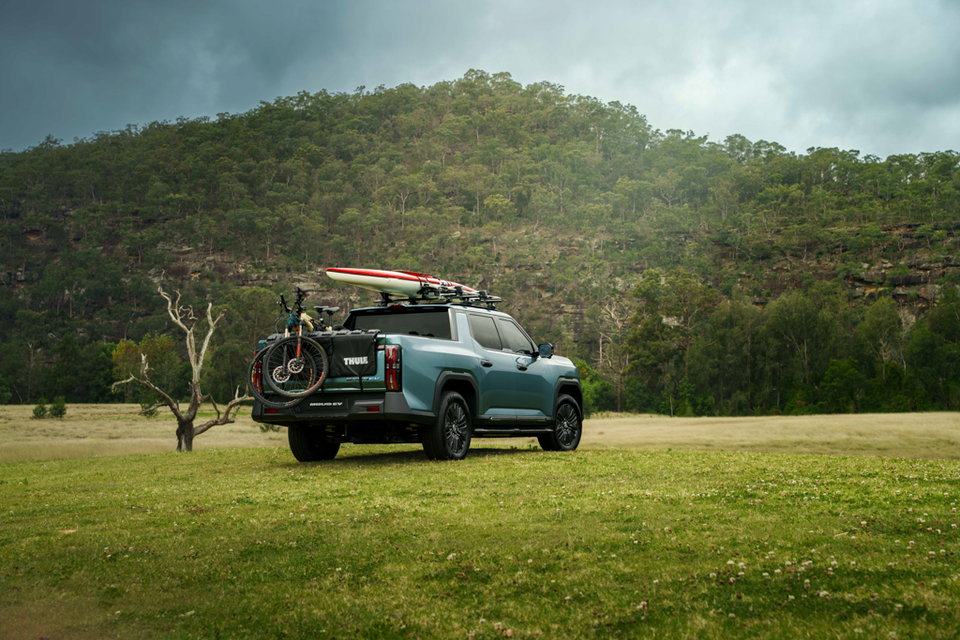
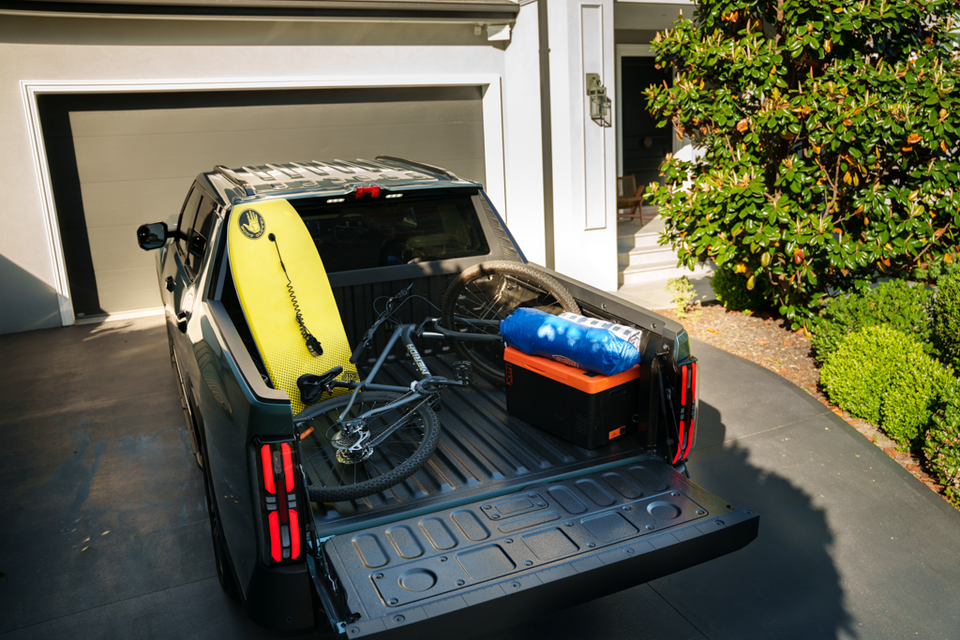
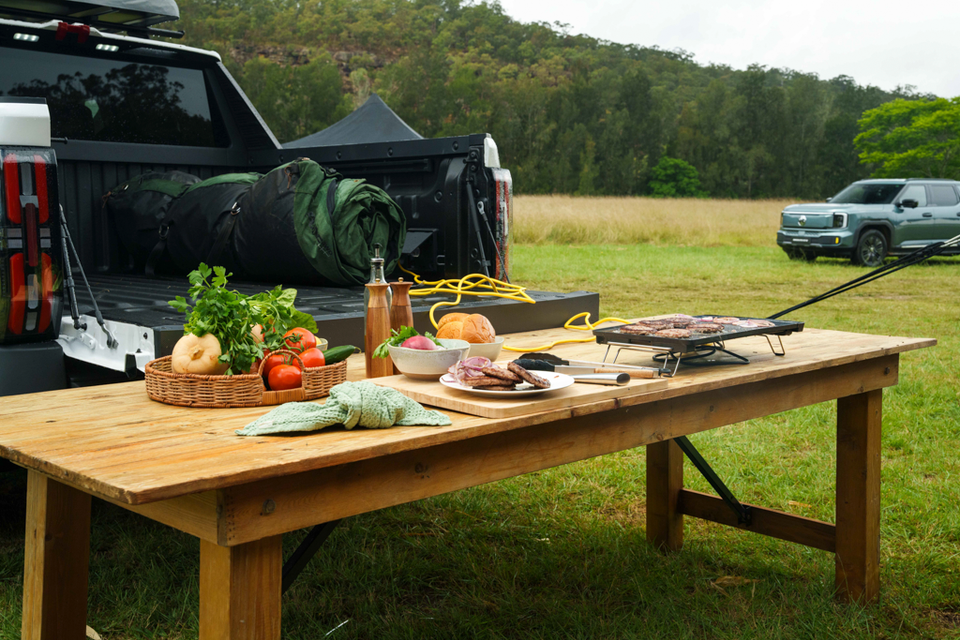
Without it, the U9 EV features a standard 1200-litre tub that's capable of accommodating a standard Australian pallet. Or a comprehensive set of camping essentials, if you're that way inclined. It's a serviceable load area, although not quite as impressive as the spacious passenger cabin.
Tie-down points and sliding anchors help secure awkward loads, while tools and appliances can be powered via two 2.2kW outlets in the tub or an external CCS2 adapter offering up to 6.6kW of vehicle-to-load (V2L) output.
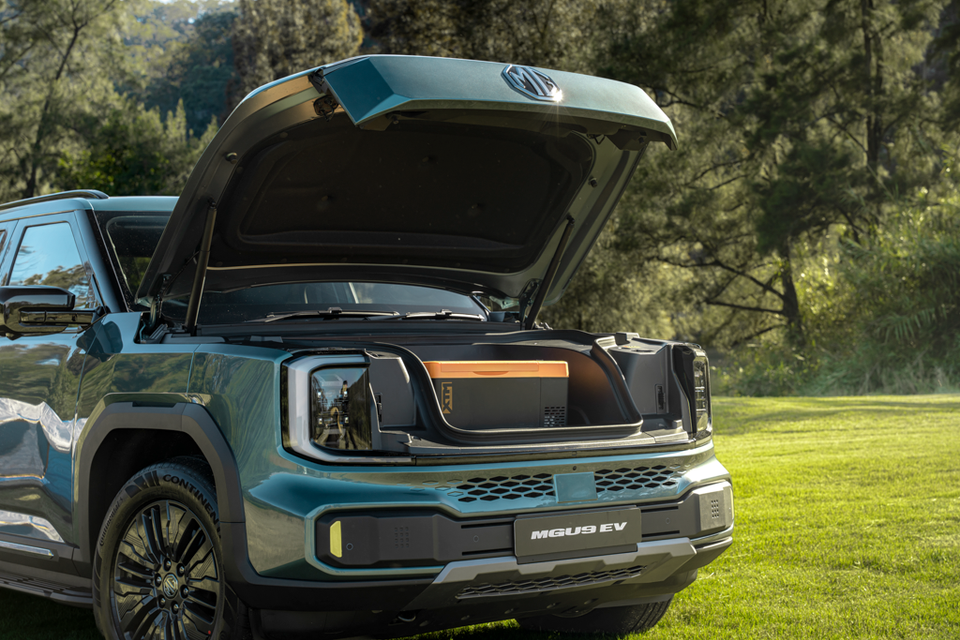
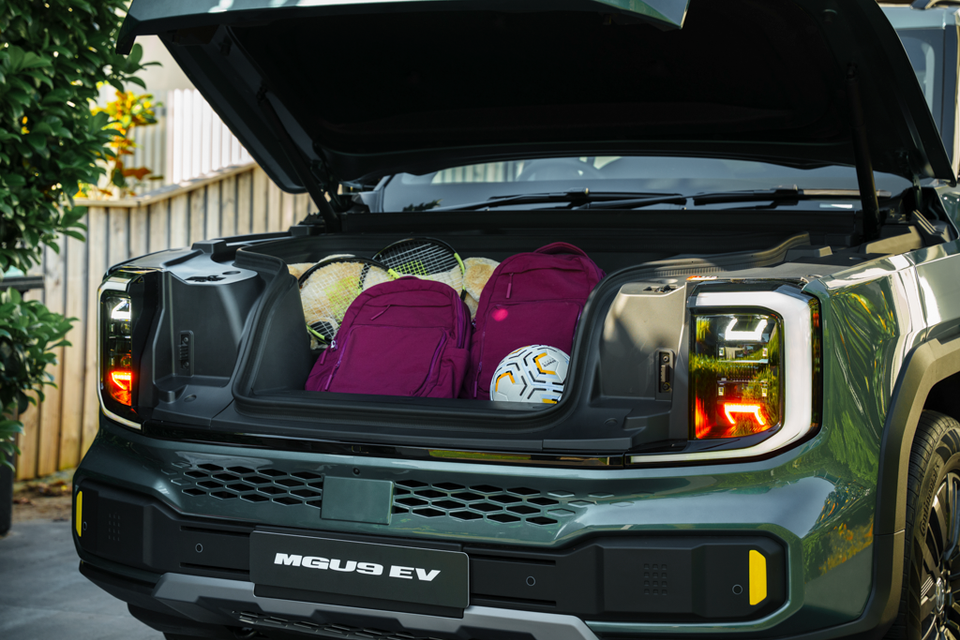
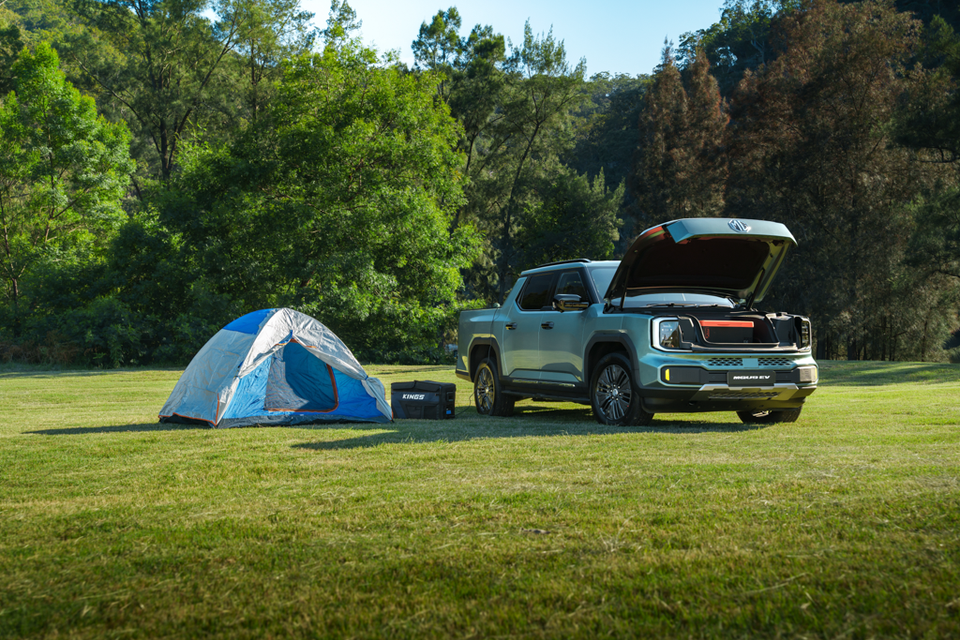
Up front there's a 236-litre 'frunk' accessible via a power-operated bonnet – yes, you read that correctly. Inside you'll find a wide, plastic-lined compartment perfect for storing anything wet or dirty, such as fishing gear or hiking boots. Alternatively, you can hook up an esky to a third 2.2kW outlet.
A full-size spare wheel is mounted underneath the tub.
It really is a very practical thing, the U9 EV, and in this respect it fulfils its promise to lifestyle buyers.
| Dimensions | MG U9 EV |
|---|---|
| Length | 5500mm |
| Width | 2265mm (mirrors extended) |
| Height | 1874mm |
| Wheelbase | 3300mm |
| Cargo capacity | 1200L – tub volume 236L – under-bonnet storage |
To see how the MG U9 EV lines up against the competition, check out our comparison tool
The U9 EV boasts some of the most impressive specs in the ute class, courtesy of its dual-motor all-wheel drive configuration and huge 102kWh battery pack.
| Specifications | MG U9 EV |
|---|---|
| Drivetrain | Dual-motor electric |
| Battery | 102.2kWh LFP |
| Power | 325kW |
| Torque | 700Nm |
| Drive type | e-AWD |
| Weight | 2815kg |
| 0-100km/h (claimed) | 5.8 seconds |
| Energy consumption (claimed) | 26.7kWh/100km |
| Energy consumption (as tested) | 26.5kWh/100km |
| Claimed range (WLTP) | 430km |
| Max AC charge rate | 11kW |
| Max DC charge rate | 115kW |
| Payload | 685kg |
| Braked towing capacity | 3500kg |
| Gross vehicle mass (GVM) | 3500kg |
| Gross combination mass (GCM) | 6500kg |
While not quite the quickest ute on the market – that title belongs to the Shark 6 Performance – the U9 EV comes bloody close, able to sprint from 0-100km/h in just 5.8 seconds (claimed).
And more importantly, the U9 EV launches as the only electric ute rated to tow 3.5 tonnes with a braked trailer – more than both the HiLux BEV (2000kg) and Musso EV (1800-2300kg), and on par with the top-selling diesel-powered Ranger.
Its WLTP-tested driving range of 430km is also up on the HiLux BEV (245km) and Musso EV (380-420km).
However, the U9 EV still falls well short of diesel and plug-in hybrid alternatives in the endurance stakes, with some capable of travelling upwards of 800km between stops.

This is particularly relevant when towing, as hauling a heavy caravan decimates efficiency regardless of powertrain. For a diesel Ranger, that could mean a reduced range of around 400-500km, while the U9 EV could theoretically be limited to approximately 200km – although MG hasn't published a towing range figure.
The inconvenience of more frequent stops is compounded by longer charging times, with the U9 EV – like other electric vehicles – taking considerably longer to recharge than a combustion-powered vehicle takes to refuel.
While a conventional fuel stop can take just a few minutes, MG claims the U9 EV takes 42 minutes to charge from 20 to 80 per cent using a suitable DC fast-charger, with charging speeds topping out at 115kW.
By comparison, the HiLux BEV and Musso EV can both complete the same charge in roughly half an hour under optimal conditions.
If this is the car for you, we’ll compare offers from trusted dealers, handle the back and forth and manage your purchase from enquiry to delivery.
Then there's the issue of payload. At just 685kg, the U9 EV's carrying capacity falls well short of traditional diesel workhorses, although similarly low figures aren't uncommon among electrified lifestyle utes.
Nevertheless, that limits the usefulness of its impressive 3500kg braked towing capacity. A 350kg towball download alone would account for more than half that payload, leaving just 335kg for occupants, luggage and other cargo. As such, a family of four towing a heavy caravan could easily push the U9 EV towards its gross vehicle mass (GVM) limit.
Unlike the diesel-powered MG U9, the U9 EV features four-wheel electronic air suspension – a unique selling point among sub-$100k utes. Five ride-height settings are available, allowing the suspension to raise the body by up to 75mm or lower it by 40mm.
To see how the MG U9 EV lines up against the competition, check out our comparison tool
The U9 EV drives much like a full-size American pickup, just without all the noise.
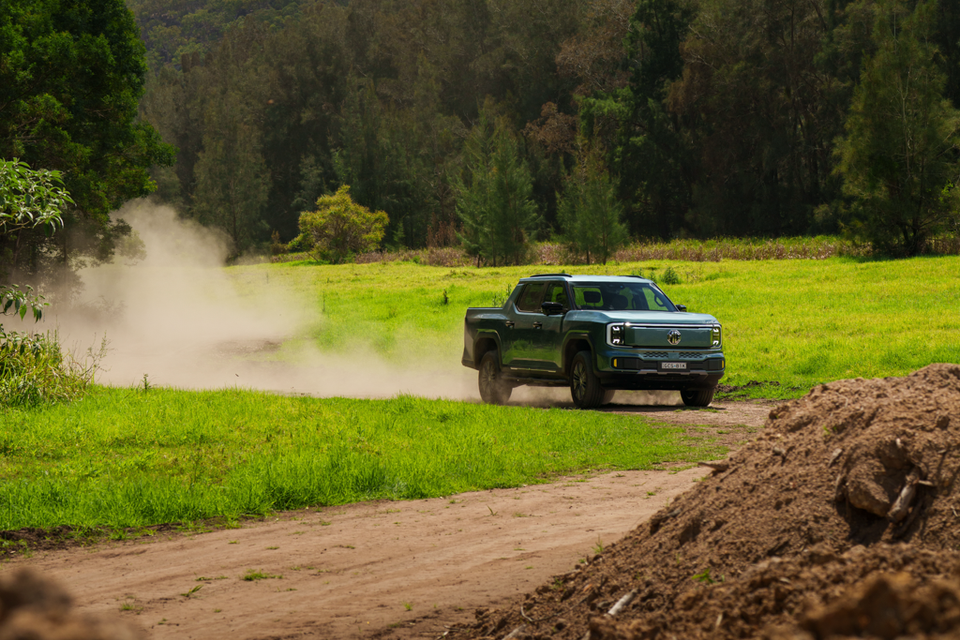
Nearly as wide in the body as a Ford F-150, it takes up the majority of an Australian lane, requiring constant steering corrections to keep it clear of the rumble strips lining the country roads on our curated test loop.
And while we can't yet speak from experience, the challenges posed by the U9 EV's sheer size are likely to be magnified in urban environments, where narrow suburban streets and tight multi-storey car parks could prove particularly troublesome.
Also like its American inspirations, the U9 EV packs a serious punch. Lean on the throttle and it picks up speed effortlessly, producing none of the clatter we've come to expect from diesel dual-cabs, nor the roar of a Chevy small-block V8. Sink the boot in a little further and, after a momentary delay, this 2.8-tonne behemoth surges forward with authority, its nose lifting simultaneously.
The real-world performance is impressive, in line with both the motorsport-bred Ranger Raptor and the dual-fuel Shark 6 Performance.
But I'd encourage owners to exercise restraint, as the U9 EV doesn't stop nearly as convincingly as it accelerates, and there's an awful lot of mass behind any potential collision.
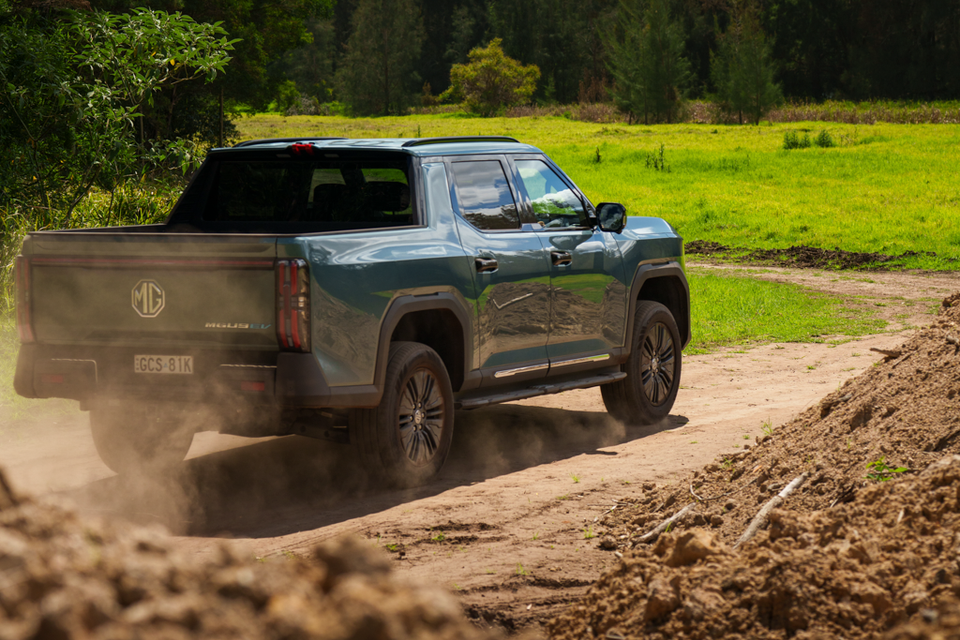
Both pedals at least feel natural underfoot, making it easier to meter out going and stopping power.
The friction brakes are supported by three levels of regenerative braking, although we only sampled the standard setting. In this mode, lifting off the throttle produces smooth, predictable deceleration without any noticeable delay.
Still, with great power comes great responsibility. And all that grunt is best deployed in a straight line, as the U9 EV doesn't like changing direction at speed.
Slow, lazy steering hardly inspires confidence into bends, though you can adjust its weighting through the infotainment screen.
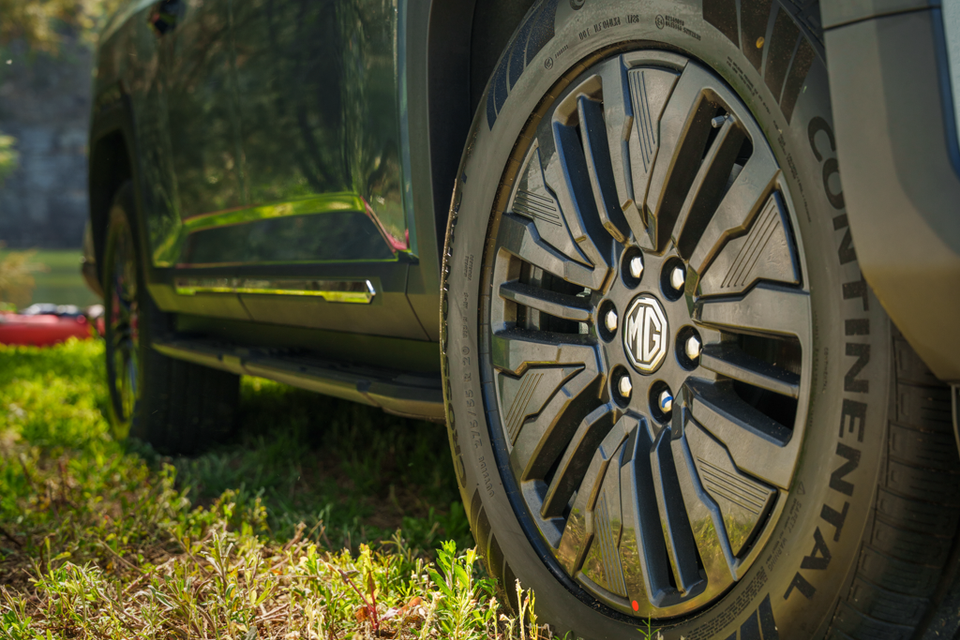
Tip the front-end in without much forethought and the body rolls clumsily to the outside, while the Continental tyres are quick to squeal in protest when pushed, seemingly struggling under the ute's considerable heft. All the while, the U9 EV's long bonnet makes it difficult to judge the position of its front corners through tighter country twists, let alone the sharp 90-degree turns typical of urban driving.
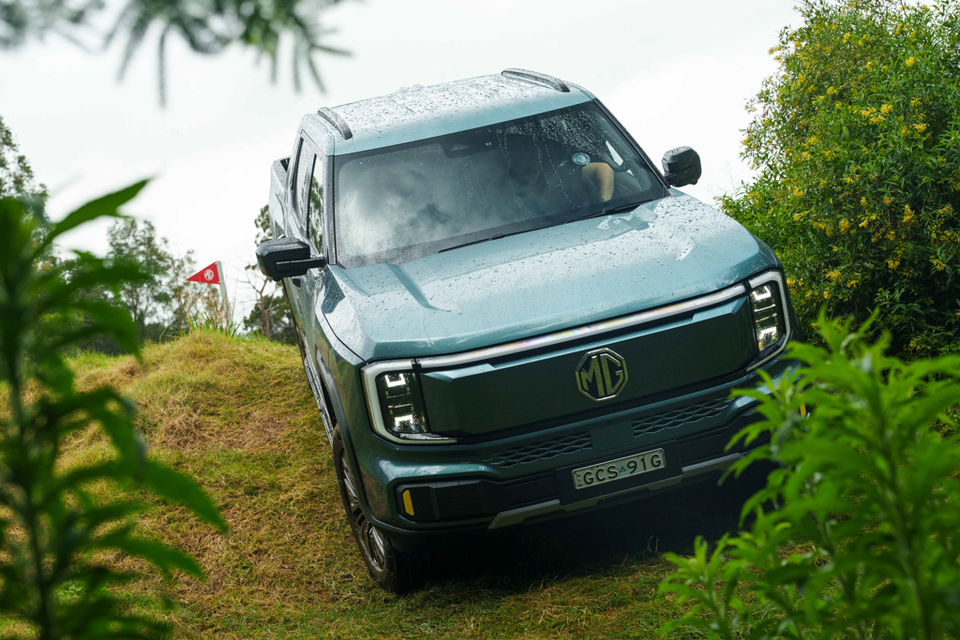
The slightly damp conditions of our test drive wouldn't have helped any of this, but it's apparent the U9 EV doesn't handle as well as some of its peers, not that most prospective buyers are likely to care.
Drive in a relaxed manner and the U9 EV behaves just fine.
That said, gentle treatment doesn't guarantee a smooth ride. Despite its sophisticated air suspension setup, the U9 EV persistently bobbles over relatively smooth surfaces, occasionally throwing in a sharp thump when encountering larger potholes.
It's still more comfortable than most traditional leaf-sprung utes, but we expected better bump absorption given the MG's premium positioning.
Again, weight is the enemy here.
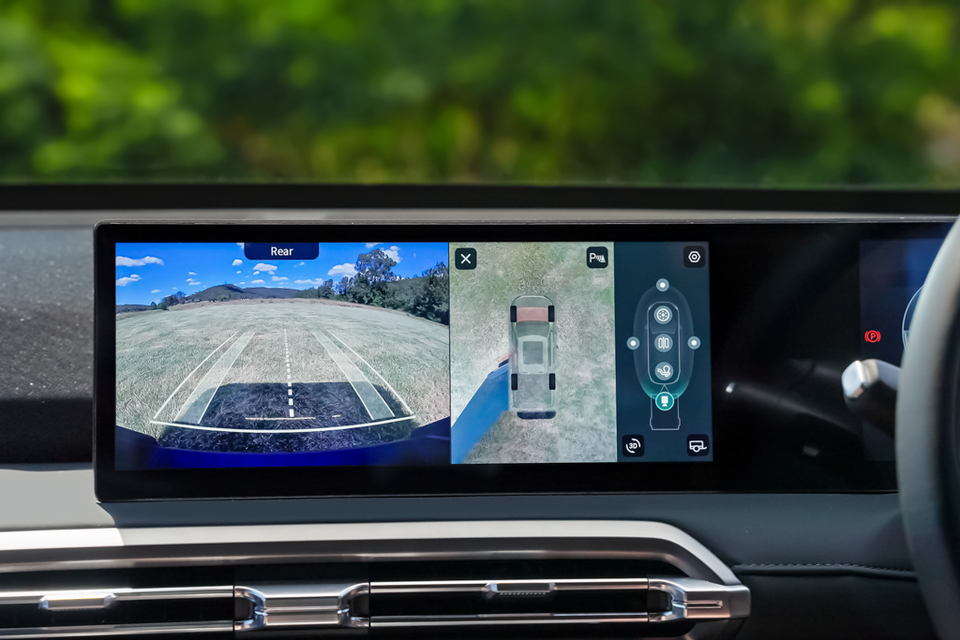
We weren't afforded the opportunity to drive the U9 EV on the highway, but straight, open roads are likely to showcase its best attributes – powertrain refinement, noise suppression, cabin comfort, and easily configured advanced driver-assist systems (ADAS).
We did, however, get the chance to take it off-road, although our testing was limited to a short, undemanding course purpose-built for the launch event. Keeping in mind the limitations of such an environment, we came out of the experience cautiously impressed.
The course featured a handful of climbs and descents, but nothing that seriously tested the U9 EV's traction or wheel articulation.
That's worth noting because, unlike the diesel U9, which features a mechanical four-wheel drive system with a low-range transfer case and differential locks, the U9 EV relies on electronically controlled all-wheel drive, a selection of terrain-specific drive modes and height-adjustable air suspension.
Nevertheless, it made light work of the modest obstacles thrown its way, with little effort required from behind the wheel. As previously mentioned, both pedals are easy to modulate, and the predictable response of the electric motors further promotes smooth progress.
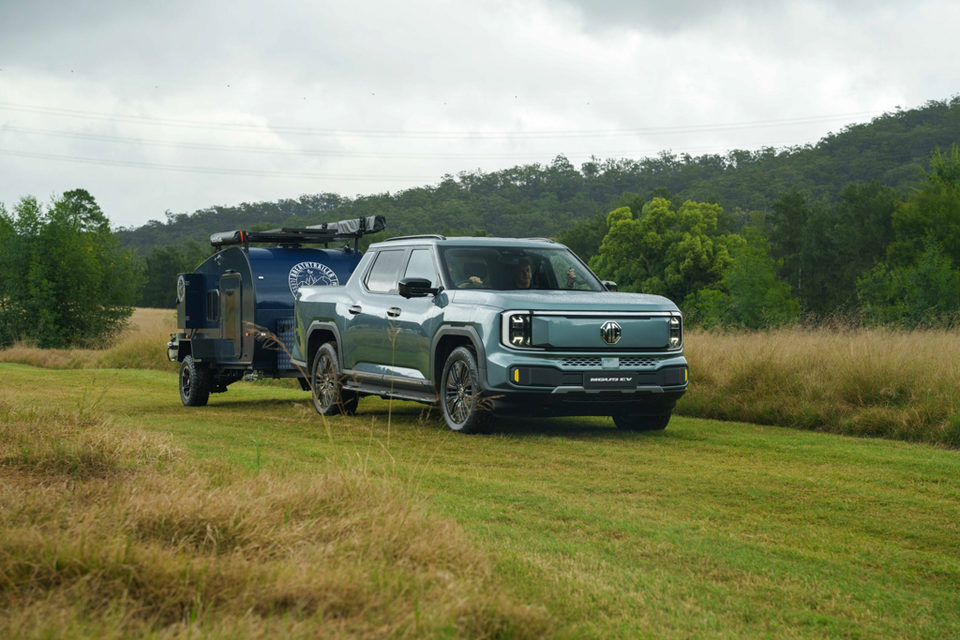
There's also a unique serenity to traversing nature in a near-silent vehicle, without the constant racket of a diesel engine disturbing the peace.
Despite its hulking proportions, the U9 EV is surprisingly manoeuvrable in tight spaces, with optionally light steering and a tighter-than-expected turning radius. A neat set of cameras helps too, feeding footage from eight different exterior angles through the infotainment screen.
Adjusting the ride height helps negotiate steep climbs and descents without bottoming out, while the air suspension does a decent job of controlling vertical body movements, preventing the bouncing commonly felt in leaf-sprung off-roaders.
But how the U9 EV handles rugged, uncontrived terrain remains to be seen.
The same can be said of heavy towing, given we spent just a few minutes slowly dragging a 900kg trailer along a dirt track. Doing so revealed no obvious deficiencies, and nor should it.
| Off-road dimensions | MG U9 EV |
|---|---|
| Track front and rear | 1685mm |
| Ground clearance | 230mm – unladen |
| Approach angle | 29 degrees |
| Departure angle | 25 degrees |
| Ramp breakover angle | 20 degrees |
| Wading depth | 550mm |
To see how the MG U9 EV lines up against the competition, check out our comparison tool
The EV's standard equipment largely mirrors that of the oil-burning Explore Pro, albeit with a handful of minor differences. Both rank among the best-equipped utes priced under $100,000.
2027 MG U9 EV equipment highlights:
To see how the MG U9 EV lines up against the competition, check out our comparison tool
As of last week, the U9 EV wears a five-star rating from local safety authority ANCAP, based on testing of the related Maxus eTerron 9 in 2024.
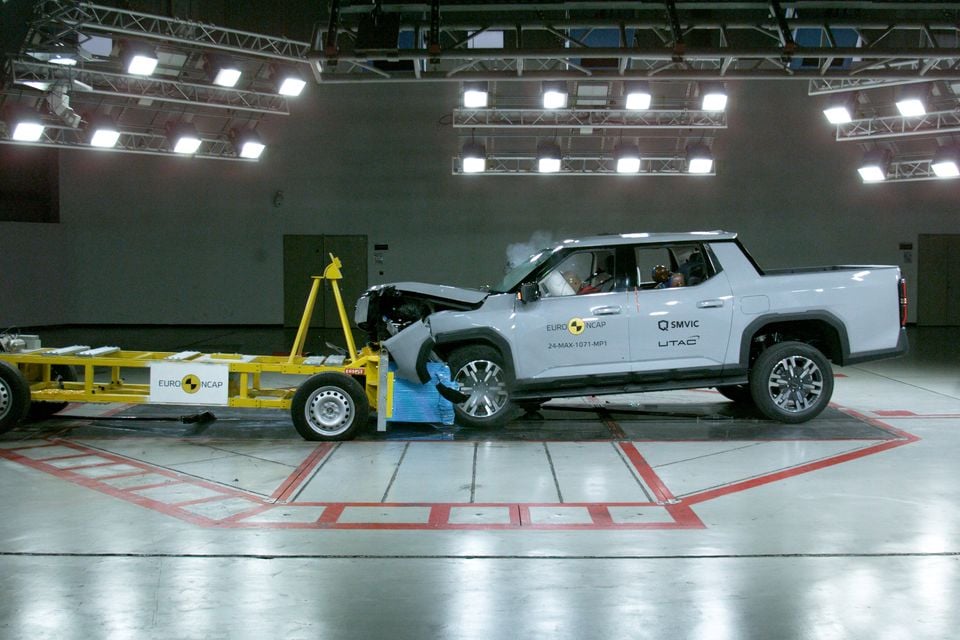
| Category | MG U9 EV |
|---|---|
| Adult occupant protection | 91 per cent |
| Child occupant protection | 89 per cent |
| Vulnerable road user protection | 84 per cent |
| Safety assist | 85 per cent |
Standard safety features include:
To see how the MG U9 EV lines up against the competition, check out our comparison tool
MG backs the entire U9 range with a shorter warranty than its other models – just five years, extendable to seven years if owners service their vehicles within the MG dealer network.
| Servicing and Warranty | MG U9 EV |
|---|---|
| Warranty | 5 years, unlimited kilometres – standard 7 years or 200,000km – conditional |
| Roadside assistance | 5 years |
| Service intervals | 2 years or 30,000km |
| Capped-price servicing | Up to 10 years |
| Average annual service cost | $275.50 |
| Total capped-price service cost | $2755 |
| Connected services | 1 year free |
Routine maintenance is required every two years or 30,000km, whichever comes first – relatively infrequently by ute standards – with capped-price servicing available for up to a decade.
To see how the MG U9 EV lines up against the competition, check out our comparison tool
MG has priced this one out of relevance.
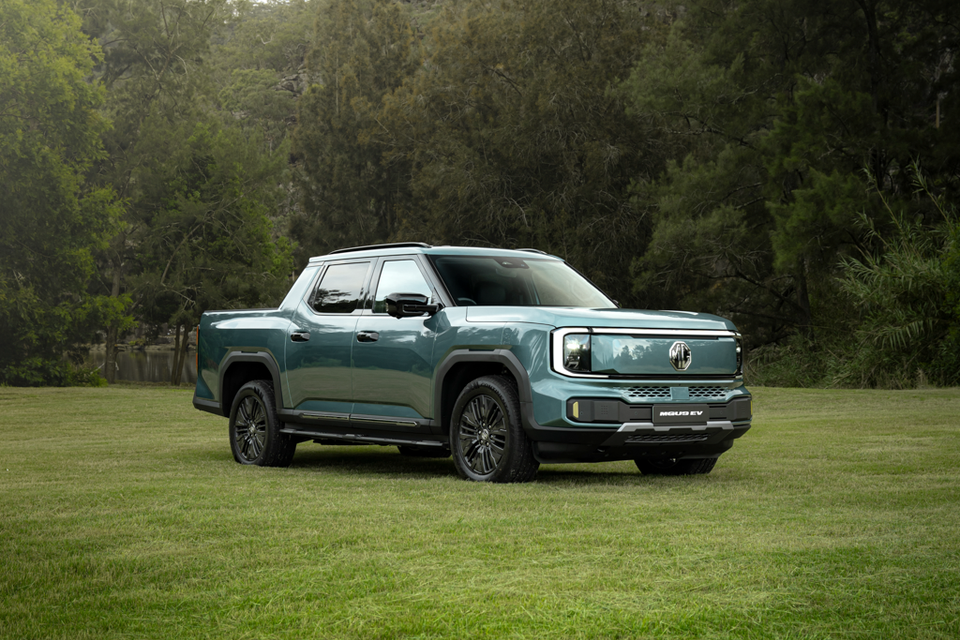
Why should lifestyle ute buyers pay $15,000-$20,000 more than they would for a BYD Shark 6 Performance or GWM Cannon Alpha PHEV, only to end up with a ute that's likely to be less capable off-road and certainly less suited to long road trips, particularly those involving towing?
Full electrification is worth a premium in some vehicle segments, but this isn't one of them, with versatility valued above all else in a ute.
And why should conservative fleet buyers choose the U9 EV when they can have an electric Toyota – albeit a pretty average one – for similar money? The HiLux BEV is inferior in many respects, but boasts the backing of a trusted brand synonymous with reliability and strong resale values, not to mention an extensive dealer network.
At $70,000, the U9 EV has enough going for it to turn the heads of passionate EV converts, active families otherwise shopping for an SUV, and perhaps some light commercial vehicle operators. There really is plenty to like about its punchy yet refined electric powertrain, respectable unladen range, short-distance towing capability, luxurious cabin, and seemingly endless onboard storage.
But at its current price of nearly $85,000 drive-away, it's a hard sell.
CarExpert can save you thousands on a new MG U9 EV. Click here to get a great deal.
Click the images for the full gallery
If this is the car for you, we’ll compare offers from trusted dealers, handle the back and forth and manage your purchase from enquiry to delivery.
Quickly see how this car stacks up against its competition. Select any benchmark to see more details.
2026
$49,990
2026
$52,990
2025
$52,990
2026
$54,990
2025
$55,990
2026
$57,990
2025
$60,990
Josh Nevett is an automotive journalist covering news and reviews, with a background in motorsport journalism.
Add CarExpert as a Preferred Source on Google so your search results prioritise writing by actual experts, not AI.
William Stopford
3 Days Ago

Alborz Fallah
3 Days Ago
Josh Nevett
3 Days Ago

Derek Fung
3 Days Ago
Alborz Fallah
5 Days Ago
Josh Nevett
6 Days Ago
Add CarExpert as a Preferred Source on Google so your search results prioritise writing by actual experts, not AI.
# Based on VFACTS and EVC data
† Displayed prices are based on the drive-away price of the vehicle, which includes delivery charges, registration fees, number plates, and applicable road taxes, based on a Sydney location. However, prices may vary between states and territories, and additional costs such as compulsory third party (CTP) insurance, dealer delivery fees, and optional extras are not included. These prices are subject to change without notice and may not reflect current market pricing or dealer offers.
 Automotive Vehicle Spec Data & 4K images Powered by JATO Dynamics Ltd