


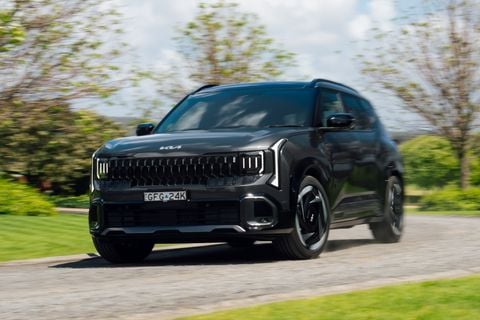
2027 Kia Seltos review
The all-hybrid Kia Seltos arrives in a booming small SUV segment with big improvements and the makings of greatness, if you choose the right spec.

CarExpert's verdict on the Seltos
Good
The new Seltos brings marked improvements over its predecessor, perhaps two generations' worth. However, while it has made strong strides in technology and efficiency, performance and value (particularly higher up in the range) aren't strong enough to make it a standout in an ever-competitive small SUV market segment.
What we love
- Newfound efficiency, tech levels
- Segment busting cabin space
- Solid value in S and Sport grades
Worth a thought
- Powertrain lacks punch
- GT-Line grades too pricey
- Some annoying spec oversights
Are there other rating labels?
- Excellent
- An outstanding car in almost every way. A joy to drive, packed with great features, and highly recommended.
- Very Good
- A well-rounded car that's enjoyable to drive, offers great value or features, and is easy to recommend.
- Good
- A solid choice that does most things well. Comfortable, capable, and worth considering in this segment.
- Average
- Meets the standard for this segment. May not stand out, but still a dependable and reasonable option.
- Below Average
- Falls a bit behind others in the segment, but still passes safety checks and may suit specific needs or budgets.
Introduction
Kia's second-generation Seltos small SUV has finally arrived in Australia, and it's going all-in on hybrid.
That's right, the 2027 Kia Seltos is hybrid-only in Australia, much like the UK. The Korean brand is hoping to cash in on rapidly increasing appetite for hybrid SUVs in Australia, particularly smaller ones.
While it's the first hybrid-powered Seltos, it's not the first time Kia has offered a hybrid small SUV in Australia. The now-defunct Niro was available with hybrid (HEV) and battery electric (EV) powertrains, but high pricing relative to the direct competition always made it a niche player here.
Now with the new Seltos HEV, Kia is putting all 10 toes (or four tyres) down in what is one of the hottest market segments in the country. Small SUVs currently account for 18 per cent of Australia's new-vehicle market, placing it second only to medium SUVs in terms of popularity.
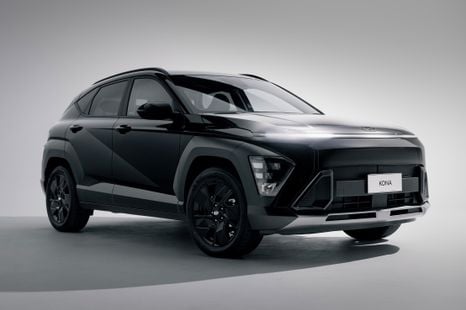
There's also some family rivalry at play here. Sister brand Hyundai has seen great success with its related Kona, which offers petrol, hybrid and electric powertrains. Halfway through 2026, the Kona Hybrid was Australia's third-best selling hybrid model with 8086 deliveries – accounting 61.6 per cent of overall Kona sales.
The Seltos has been a core model for Kia since it was launched in 2019, and with the old model being phased out this year it has cost the Korean brand solid volume in one of Australia's biggest and most hotly contested parts of the market.
We were impressed by Kia's new electrified compact SUV in Korea, but has that sentiment translated to the local model which has received extensive domestic tuning? Read on to find out.
How much does the Kia Seltos cost?
The price of entry into the new Seltos range has risen by nearly $7000, though this is somewhat offset by the hybridised powertrain and increased standard equipment levels.
| Model | Price before on-road costs | Drive-away pricing |
|---|---|---|
| 2027 Kia Seltos S HEV FWD | $37,990 | $39,990 |
| 2027 Kia Seltos S w/ Safety Pack HEV FWD | $40,150 | $42,490 |
| 2027 Kia Seltos Sport HEV FWD | $41,910 | $43,990 |
| 2027 Kia Seltos Sport+ HEV FWD | $44,970 | $46,990 |
| 2027 Kia Seltos GT-Line HEV FWD | $49,870 | $52,990 |
| 2027 Kia Seltos GT-Line HEV AWD | $52,870 | $55,490 |
Key petrol-electric rivals for the Seltos include the related Hyundai Kona Hybrid (from $39,990 drive-away), in addition to the Toyota Corolla Cross Hybrid (from $37,440 plus on-road costs), GWM Haval Jolion Hybrid (from $32,990 drive-away), Chery C5 Hybrid (from $31,990 drive-away), MG ZS Hybrid+ (from $29,990 drive-away), Nissan Qashqai e-Power (from $45,850 plus ORCs), and Jaecoo J5 SHS-H (from $34,990 drive-away).
It's also worth noting that Kia will sell you the larger (and turbocharged) Sportage Hybrid mid-size SUV for as little as $44,490 drive-away, which is $500 more than the new mid-spec Seltos Sport if you're after size and space more than feature inclusions – size matters more to some...
Compare the Kia Seltos
Want to see how the Kia Seltos lines up against the competition?
Use our comparison tool for a side-by-side look at the specs, features and prices of the Seltos and its rivals.

What is the Kia Seltos like on the inside?
Kia has done a good job at proliferating high-grade tech across the range, and letting the upholsteries and material trimmings be the main differentiator between model grades.
All versions get the Connected Car Navigation Cockpit (ccNC) with 12.3-inch widescreen displays for the instrument cluster and touchscreen infotainment system, sandwiching a 5.0-inch touch-capacitive climate control panel.
For reference, the larger Sportage and Sorento SUVs get a clock-radio-style 'basic' instrument cluster with a 4.3-inch colour supervision display, rather than the more premium digital setup. It's good to see Kia giving cheaper models the same high-end tech feel, which really elevates the cabin of the base S.
Dual-tone cloth seat trim and harder plastic surfaces line the cabin of the S, S with Safety Pack and Sport; though everything feels pretty well screwed together and the tactility of the controls and switchgear is consistent across the lineup.
That said, it's a shame soft-touch door trims aren't included until the penultimate Sport+ grade, which at $46,990 drive-away is similar in price to the top-spec Hyundai Kona Highlander. Still, the Kia's cabin feels more upmarket in design and execution while offering more space.
As we found during our international drive of the new Seltos, as well as recent Kia and Hyundai models with the Group's latest ccNC infotainment setup, the clean tiled interface and user-friendly menu structure make the Seltos' infotainment system easy to use despite its long list of functions and features.
Standard Kia Connect services for seven years includes stuff like weather information and online navigation routing, as well as compatibility with the Kia Connect smartphone app which opens up access to vehicle data and analytics on the fly as well as remote functions so you can locate your car as well as, for example, turn the lights on and off or pre-condition the cabin using the climate control system.
More broadly, it's also quick and snappy in operation with attractive and clean graphics. It may not have the gloss and showboaty features of some rival models from Chinese brands, but I think many will appreciate its simplicity and ease of use.
The GT-Line's eight-speaker Harman Kardon premium audio system is stronger than the six-speaker setup in all other variants, but even the base unit provides clear sound quality, with the premium system dialling up the depth and bass.
Storage and convenience features dotted around the cabin are pretty familiar from other members of the Kia family, from the modular centre console with adjustable cupholders to the wide shelf under the dashboard fascia, which in the GT-Line gets smartphone charging – a silly product planning oversight not to be included in the S or Sport grades, in my view.
At least there's good space for your odds and ends, from the aforementioned tray and modular cupholder/cubby array, to the storage box under the padded front-centre armrest, as well as the door bins which can accommodate smaller bottles and packets of chips or lollies.
The general quality and tactility of the interior is solid for the segment and feels fresher and more upmarket than the related Hyundai Kona as well as the Toyota Corolla Cross, and we appreciate Kia's resistance to relegating key functions like volume adjustment and climate controls to touchscreens – though the ccNC array offers an additional climate touch panel to augment the physical toggle switches.
While the door and dashboard uppers aren't soft-touch in all model grades, the key touchpoints up front like the steering wheel, door armrests and front-centre armrest are all padded and supple to touch, and the leather-look upholstery and seat trims (where applicable) don't feel cheap and prone to premature wear.
The second row has benefitted from a 60mm increase in wheelbase, opening up more passenger space than the previous generation, which was already one of the roomier small SUV.
Kia says that has translated to an extra 25mm of legroom in the rear compared to the old model, along with an extra 12mm of shoulder room. Headroom has also increased by a quoted 14mm compared to the old car.
While we didn't pull out a tape measure and verify these claims back-to-back with its predecessor, the new Seltos has segment-straddling space in the rear thanks to the vehicle's added length and boxier profile, meaning 6'1" tall folk like me can easily sit behind their preferred driving position. Even in GT-Line variants with their full-length panoramic sunroof with power sunblind, there's good space in the rear for taller passengers, which can't be said for all models in this segment.
Rear amenities include directional air vents at the rear of the centre console, USB-C charging ports on the inner sides of the front seats, and map pockets behind the front seats. Sport grades and up get a fold-down rear centre armrest with cupholders, while all variants get the requisite ISOFIX child seat anchor points on the outboard seats, as well as top-tether points behind all three rear seat positions.
Further back, the larger body has also translated to increased luggage capacity, now quoted at 483 litres (VDA) behind the rear seats, rising to 1441L with the rear seatbacks folded. For reference, that's 15L and 13L up on the previous car, respectively.
Like the rear seat, the Seltos' boot straddles the small and mid-size segments in terms of volume and practicality, with a tall, wide and square cargo area that will be more than big enough for couples and young families. Sadly, Australian models don't get the vehicle-to-load (V2L) function that is one of the new Seltos' headline acts globally, in the interests of making a space-saver spare wheel available.
With that said, the flagship GT-Line e-AWD's extra hardware on the rear axle means there's no space-saver wheel for the top-shelf Seltos, just a tyre repair kit, and yet Kia Australia didn't opt for V2L to compensate. Strange.
However, there's an adjustable boot floor which allows you to maximise rear cargo space with extra depth, or raise the floor to create an underfloor storage area, as well as levelling out the cargo bay when the rear seatbacks are folded.
| Dimensions | Kia Seltos |
|---|---|
| Length | 4430mm |
| Width | 1830mm |
| Height | 1605-1620mm |
| Wheelbase | 2690mm |
| Cargo capacity | 483L – Rear seats up (VDA) 1441L – Rear seats down (VDA) |
To see how the Kia Seltos lines up against the competition, check out our comparison tool
What's under the bonnet?
All versions of the Kia Seltos in Australia are powered by a 1.6-litre petrol-electric hybrid system teamed with a six-speed dual-clutch automatic transnission. The GT-Line debuts the option of an electrified all-wheel drive (e-AWD) system, which adds another electric motor on the rear axle.
| Specifications | Kia Seltos HEV FWD | Kia Seltos HEV e-AWD |
|---|---|---|
| Engine | 1.6L 4cyl petrol | 1.6L 4cyl petrol |
| Engine outputs | 74kW at 5700rpm 139Nm at 3700rpm | 74kW at 5700rpm 139Nm at 3700rpm |
| Electric motor outputs | 45kW at 2200-2500rpm 293Nm at 0-2000rpm | Front: 45kW at 2200-2500rpm 293Nm at 0-2000rpm Rear: 50kW at 2600-6800rpm 185Nm at 0-2400rpm |
| System outputs | 112kW 265Nm | 126kW |
| Battery | 1.49kWh li-ion | 1.49kWh li-ion |
| Transmission | 6-speed DCT | 6-speed DCT |
| Drive type | FWD | AWD |
| Tare weight | 1632kg | 1722kg |
| 0-100km/h (claimed) | - | - |
| Fuel economy (claimed) | 5.1L/100km – S 5.3L/100km – Sport, Sport+ 5.4L/100km – GT-Line | 5.8L/100km |
| Fuel economy (as tested) | 5.1L/100km – Sport | 5.7L/100km |
| Fuel tank capacity | 38L | 38L |
| Fuel requirement | 91-octane regular unleaded | 91-octane regular unleaded |
| CO2 emissions | 115-123g/km | 131g/km |
| Emissions standard | Euro 6 | Euro 6 |
| Braked towing capacity | 910kg | 810kg |
Oddly, the FWD version quotes a 265Nm combined torque figure, while the e-AWD version doesn't. This will be due to the rear electric motor offering peak torque at a different time to the other electric motor and internal combustion engine.
Our indicated fuel consumption figure in the Seltos Sport was achieved during a 147.2km trip from Berry to Sydney Airport, which was mostly on 110km/h freeways and uphill, so it's pretty impressive. Meanwhile, the GT-Line e-AWD's 5.7L/100km figure was recorded on a similar 141.2km drive leg out of Sydney towards the south coast. We also managed 5.4L/100km on a shorter 25km mixed country road loop in the S with Safety Pack.
It's also worth noting the Seltos HEV is homologated to the latest emissions regulations now mandated in Australia, equivalent to Euro-6d which will be superseded in Europe and the UK by EU7 regulations by year's end. Still, Kia has managed to make the Seltos HEV compatible with 91 RON regular unleaded fuel.
To see how the Kia Seltos lines up against the competition, check out our comparison tool
How does the Kia Seltos drive?
Having driven the Seltos in its homeland of South Korea earlier this year, I was eager to see how different the Australian model feels after Kia's extensive localisation program.
During my drive of the new Seltos at the international launch I noted a softness and occasional wobbliness in the suspension of the domestic-market version, as well as a vague about-centre feel to the steering.
Thankfully, Kia Australia's ride and handling team, led by acclaimed chassis engineer and former rally driver Graeme Gambold, has tightened everything up nicely to make the Seltos feel more dialled in behind the wheel, without sacrificing overall comfort and refinement.
From the get-go it felt like there was more accurate and more immediate response to steering inputs, and a tautness to the suspension that occasionally was a little too communicative in the GT-Line over corrugations and successive hits on its larger 19-inch alloys and lower-profile 235/45 tyres.
It doesn't feel sporty or 'GT Lite' in any spec, but like the related K4 small car it maintains an engaging but balanced character that makes it feel at home both around town and on the highway.
Perhaps what surprised me more was the level of general refinement and sound insulation in the cabin. While the powertrain can at times lack the grunt for decisive rolling acceleration from freeway speeds, particularly up inclines, engine noise is well-suppressed and road noise is impressively subdued for a vehicle in this segment – particularly the high-spec variants with their big wheels and thinner-sidewalled tyres.
While it's on the smaller end of the SUV scale, the Seltos feels just as at home in the 'burbs as it does on the open road, with that occasionally busy urban ride settling nicely on the highway. It remains very nicely composed even at 110km/h, and when you find a corner or two it doesn't come undone.
This isn't the case with some rivals, particularly some light car-based competitors as well as some less sophisticated Chinese-branded alternatives, so again Mr Gambold's team deserves praise for making an already decent ride (based on the Korean spec) even better for road trip-happy Aussies.
Even in Eco mode, which the vehicle defaults to on start-up, there's a light but natural weighting to the steering wheel as well as decent if not particularly communicative levels of feedback. Pop it into Sport and it firms up a little, but the feeling of connection remains a touch removed – though this isn't uncommon for a small SUV.
After the initial leg out from Sydney to Berry on the NSW south coast, we sampled the GT-Line on a 25km country loop back-to-back with the S with Safety Pack, largely to gauge the difference on smaller wheels and chubbier tyres.
There's definitely a softer edge to the S, which gets 205/65 R16 rolling stock, particularly on the loop's mix of rougher and pockmarked bitumen, but there's still a playfulness to its handling characteristics on high-speed B-roads. It also sounded like there was a touch less road noise, although the high-spec variant is already relatively refined for the segment.
It also feels as if the FWD versions are more eager to accelerate off the line, with the marginally more powerful e-AWD version feeling a touch lethargic and heavier from low speeds or standing starts. Kia's product planners indicated the rear electric motor is more for traction, rather than performance.
The six-speed dual-clutch auto feels a little elastic from a standstill and between first to second gears, not offering the same snappy feel between ratios as DSGs from the VW Group. That said, if you don't like droney e-CVTs, this car shifts and feels more like a normal car with EV capability.
A return leg in the Sport the following day demonstrated a good middle ground, given it rides on more arch-filling 18-inch wheels shod in 215/55 R18 tyres, providing a better balance between the softer edge of the S on 16s and the improved road holding and handling grip of the GT-Line on 19s.
The two-hour stint in the Sport from Berry to Sydney Airport was a near-150km non-stop journey on mostly 110km/h freeway, which demonstrated the impressive capability of the adaptive cruise control and Highway Driving Assist systems, as well as open-road fuel efficiency – showing an indicated 5.1L/100km.
If you're looking for more performance but similar efficiency, the larger Sportage HEV has a turbocharged version of the 1.6L donk that ups total system outputs to 173kW/363Nm, and is priced from $44,490 drive-away in its most basic form.
The Seltos also features what Kia calls Smart Regenerative Braking 3, nicked from its latest EV models. Effectively there are several stages of regen braking intensity, from 0 to LV3, as well as Auto which uses navigation and front sensor data to actively adjust regen braking strength on the fly to suit the prevailing conditions including road gradient and leading traffic.
As with other Kia HEV and EV models with similar systems, it offers a great breadth of adjustability and generally works as you'd expect, though my personal preference was to leave it in LV1 or 0 and just drive it normally. Still, in that regard the Seltos delivers a much more EV-like driving experience compared to hybrids from rival brands, save for the lack of a proper one-pedal drive mode, if that's your thing.
Back to the assistance systems and, as mentioned earlier, we were impressed by the accuracy and intuition of the adaptive cruise and Highway Driving Assist functions, the latter including Lane Change Assist which remains a bit slow to react.
Kia's lane-centring function (Lane Following Assist) is one of the better applications of the tech we've used in the real world, while the Blind Spot View Monitor from the S with Safety Pack and up is another handy assistant that augments the standard blind-spot assist function with a live side camera feed that projects into your instrument cluster when you indicate, providing a better look at adjacent vehicles that may be in your blind spot.
Perhaps more valuable to the average buyer is the availability of Kia's 360-degree Surround View Monitor cameras from the S with Safety Pack and up, providing a pretty good view of the vehicle's surroundings as well as being able to project a 3D mockup of the Seltos within the camera feed. Front and rear parking sensors are standard, with side sensors added in conjunction with the surround cameras.
Another strong positive is the fact you can barely hear the audible alerts for the various on-board safety systems. They were so muted and unobtrusive that we had to run through the settings to double check they were all actually on.
To see how the Kia Seltos lines up against the competition, check out our comparison tool
What do you get?
The Seltos is offered in four main trim levels – S, Sport, Sport+ and GT-Line – with the base S offering a Safety Pack option, while the GT-Line offers an additional e-AWD variant.
2027 Kia Seltos S equipment highlights:
- 16-inch alloy wheels
- Reflector LED headlights
- LED daytime running lights
- LED tail-lights
- Automatic high-beam
- Space-saver spare
- Manual flush door handles
- Roof rails
- Electrochromatic rear-view mirror
- Electric parking brake incl. auto hold
- Integrated Panoramic Display – ccNC Lite
- 12.3-inch digital instrument cluster
- 12.3-inch touchscreen infotainment system
- 5.0-inch HVAC control panel
- Kia Connect incl. over-the-air software updates
- Wireless Apple CarPlay, Android Auto
- 6-speaker audio
- Dual-zone climate control
- 4-spoke leatherette-wrapped steering wheel
- Cloth seat upholstery
- Column-type shifter with push-button start
- In-cabin camera monitor
- Keyless entry with remote start
Kia Seltos S with Safety Pack adds:
- Remote Smart Parking Assist
- Surround View Monitor – 360-degree cameras
- Blind Spot View Monitor
- Parking Collision Avoidance Assist – Reverse
- Parking sensors – side
- Gloss-black front grille
- Silver door garnish
- Heated side mirrors
Kia Seltos Sport adds:
- 18-inch alloy wheels
- Satellite navigation
- Cargo cover
- Rear centre armrest incl. cupholders
- Illuminated sun visor
- Highway Driving Assist 2 – HDA 2
- Navigation-based semi-autonomous driving assistant
Kia Seltos Sport+ adds:
- Cloth/leatherette combination seat upholstery
- Power-adjustable driver's seat incl. lumbar
- Heated front seats
- 4-spoke leatherette-wrapped steering wheel – two-tone
- Rain-sensing wipers
- Rear privacy glass
- Solar glass
Kia Seltos GT-Line adds:
- 19-inch alloy wheels
- GT-Line body styling
- Projector-type 'Signature' LED headlights
- LED front fog lights
- Head-up display – Projector type
- GT-Line leatherette seat upholstery
- Power-adjustable passenger seat incl. lumbar
- Memory function – driver
- Relaxation comfort seat – driver
- Ventilated front seats
- 8-speaker Harman Kardon premium audio
- 3-spoke sports leatherette-wrapped steering wheel
- Heated steering wheel
- Automatic flush door handles
- Aero blade wipers
- Ambient lighting
- Aluminium pedals
- Panoramic sunroof
- Power tailgate
- Tyre mobility kit – e-AWD
To see how the Kia Seltos lines up against the competition, check out our comparison tool
Colours
Standard: $NCO
- Clear White
Premium: $600
- Snow White Pearl
- Steel Grey
- Interstellar Grey
- Aurora Black Pearl
- Denim Blue
- Tan Beige
Sadly, the factory from which Kia Australia sources the Seltos is different to the one that supplies markets like South Korea and North America, meaning we miss out on some of the more interesting exterior paint options offered abroad, like Iceberg Green, Frost Blue, Magma Red Matte, and Ivory Silver Matte.
Australian Seltos buyers are also restricted to grey/black dual-tone interior colourways, despite other markets offering darker grey monotone, brown and black/green interior options depending on model variant.
To see how the Kia Seltos lines up against the competition, check out our comparison tool
Is the Kia Seltos safe?
The Kia Seltos is currently unrated by ANCAP and its sister organisation Euro NCAP, though the brand's local team says it's expected to receive a rating during early 2027 based on European crash-testing.
As with the related K4 range, Kia Australia says it expects a split four-star and five-star rating, with the base S likely to get the former, and variants from the S with Safety Pack and up scoring the later.
Standard safety equipment includes:
- 7 airbags incl. front-centre
- Adaptive cruise control
- Forward Collision Avoidance 2.0 – autonomous emergency braking
- Pedestrian, cyclist detection
- Emergency Evasive Steering
- Junction Crossing function
- Lane Direct function
- Lane Oncoming function
- Blind-spot assist
- Driver attention alert
- Lead Vehicle Departure Alert
- Forward Attention Warning
- In-cabin safety camera, mounted on rear-view mirror
- Intelligent speed limit assist
- Lane Following Assist 2.0 – lane-centring
- Lane-keep assist
- Multi-collision braking
- Parking sensors – front, rear
- Reversing camera incl. dynamic guidelines
- Safe Exit Warning
- Tyre pressure monitoring
Seltos S with Safety Pack adds:
- Blind Spot View Monitor – cameras
- Parking Collision Avoidance Assist-Rear – Rear cross-traffic assist
- Parking sensors – side
- Remote Smart Parking Assist
- Surround View Monitor incl. 3D Mode – 360-degree cameras
Seltos Sport adds:
- Highway Driving Assist 2
- Navigation-based adaptive cruise + lane centring
- Lane Change Assist
To see how the Kia Seltos lines up against the competition, check out our comparison tool
How much does the Kia Seltos cost to run?
The Seltos is covered by Kia Australia's seven-year, unlimited-kilometre warranty, with capped-price servicing for the same time duration, and service-activated roadside assistance for up to eight years.
| Servicing and Warranty | Kia Seltos HEV |
|---|---|
| Warranty | 7 years, unlimited kilometres – Vehicle 8 years or 160,000km – HV battery |
| Roadside assistance | Up to 8 years – Service activated |
| Service intervals | 12 months or 15,000km |
| Capped-price servicing | 7 years |
| Average annual service cost | $547.14 |
| Total capped-price service cost | $3830.04 – 7 years |
While the capped-price service program spans a lengthy seven years, pricing remains a sticking point for Kia compared to rival brands like Honda and Toyota.
Over the seven-year program you'll pay an advertised $3830.04 in scheduled service fees, averaging $547.14 per annum. Part of that is down to the 48-month/60,000km major service, which costs a lofty $912.97.
That said, the Hyundai Kona Hybrid costs $3231 to service over the first five years, compared to the Kia's $2619.92 in the same period – one of the few recent instances where a Kia is cheaper to maintain than its Hyundai equivalent.
To see how the Kia Seltos lines up against the competition, check out our comparison tool
CarExpert's Take on the Kia Seltos
The positive impression the new Seltos left us with from the international launch drive has carried through to the Australian model, perhaps even more profoundly so thanks to its localised chassis and steering setup and confirmation of local pricing and specifications.
While it's more expensive than its predecessor, the MkII Seltos is priced in line with its key hybrid rivals from established auto brands, offers competitive levels of practicality and space, and has a nicely balanced ride and handling tune that's been honed in Australia, for Australians.
The feature spread across the range is much better than before too, with standard LED lighting and high-grade displays across the lineup, and the Safety Pack offers relatively affordable access to Kia's desirable high-end safety and assistance tech.
As we found on the global launch, the segment-busting space and user-friendly tech remain strong points. And while it's not as plush inside as a Qashqai or some Chinese rivals, it feels a cut above the Kona and Corolla Cross in terms of cabin presentation and tactility.
Lower down in the range, the stronger value proposition particularly in the S with Safety Pack and Sport grades make this a compelling option against legacy-branded rivals.
But there are still a few gripes worth mentioning. The value equation wanes quite quickly further up the range, with the GT-Line teetering too close to larger and more premium competition in terms of price. We also miss out on the V2L function in order to allow for a spare tyre, even in the e-AWD version that lacks a spare.
Powertrain performance also leaves a lot to be desired, particularly when Japanese HEV and Chinese PHEV and EV rivals offer more grunt and better efficiency for similar money. There is value in the Kia brand and its generous aftersales provisions though, which should attract a bit more recognition and trust in the market than some new Chinese challengers. Still, as we've seen of late, that's not always enough for many.
The new Seltos is a solid entrant in the burgeoning small SUV space, and against rivals from Hyundai, Nissan and Toyota it certainly makes a strong case for itself... further down the range.
Best pick? The Sport offers the outright best bang for your buck, while the Sport+ does a good job of balancing convenience and luxury features with price if you want a bit more fruit. The GT-Line's niceties aren't worth the price premium in this reviewer's opinion and, if you want AWD, get a Sportage.
CarExpert can save you thousands on a new Kia Seltos. Click here to get a great deal.
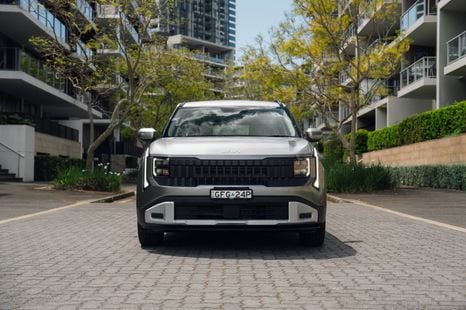
Click the images for the full gallery






 Automotive Vehicle Spec Data & 4K images Powered by JATO Dynamics Ltd