
Damion Smy
Volkswagen confirms Chinese-made cars for Australia
Volkswagen’s global boss says Chinese-made models are on their way to Australian showrooms as the brand looks to arrest a sales slump here and overseas.
3 Hours Ago
Deputy News Editor
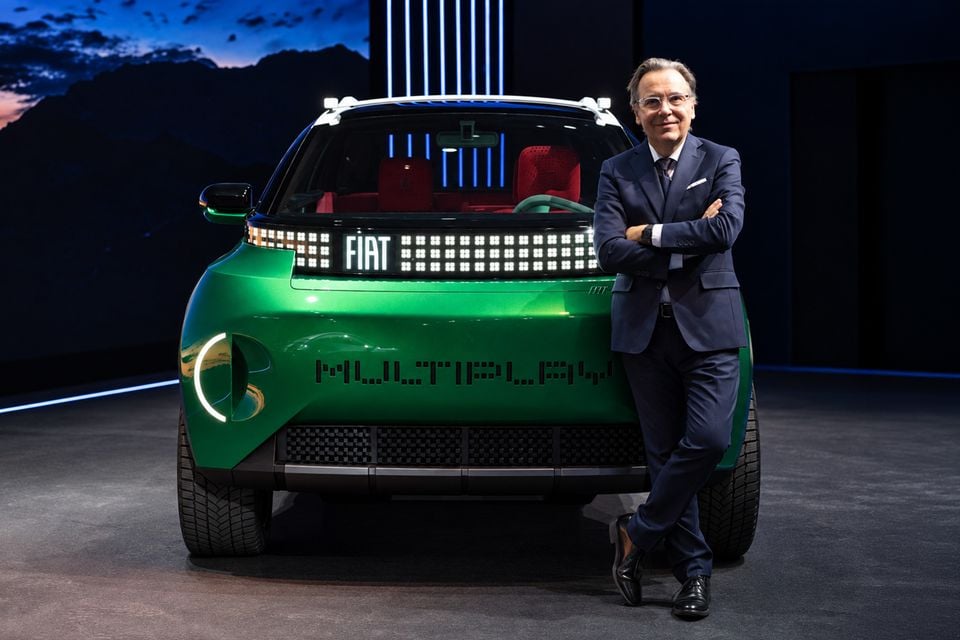
The newly appointed boss of Italian auto brand Fiat says the latest safety ratings from Europe’s independent automotive safety body, which works with Australia’s new-vehicle safety watchdog, only serve to confuse consumers – and that the industry has moved on.
Speaking to Autocar following his appointment as Fiat CEO in August 2026, Arnaud Belloni said more rigorous testing protocols introduced by the European New Car Assessment Programme (Euro NCAP) this year have baffled buyers.
“I don’t know how to be politically correct here, but Euro NCAP, it is existing, but customers don’t get it anymore,” Mr Belloni told Autocar.
“They are totally lost and it’s because of Euro NCAP changing the rules every two years, so what was a five-star car a few years ago becomes a three-star car, and then a two.”

Euro NCAP updates its protocols every three years to keep pace with advances in auto safety technology, with the latest protocols covering vehicles assessed from 2026 to 2028.
The protocols were largely adopted by the local Australasian New Car Assessment Program (ANCAP), with only minor differences between the two organisations’ criteria. The BMW iX3 electric SUV was the first model assessed under the new requirements, achieving a maximum five-star rating.
Both Euro NCAP and ANCAP apply six-year rating validity periods. New models become officially ‘unrated’ once their rating expires unless it is reassessed, with only vehicles built during the validity period retaining their original ratings.
An Australian example is the current Toyota Corolla, whose five-star rating based on 2018 testing expired at the end of 2024. Examples built from January 1, 2025, are therefore unrated. A new-generation Corolla is expected to be unveiled sometime in 2027.

“I’ve worked in this industry for 35 years and Euro NCAP has been there almost from the beginning. And I can tell you very few manufacturers are taking it really seriously,” the Fiat boss told Autocar.
“They don’t drive strategy based on your rank. Customers don’t know because they are lost, so it’s not important… Everybody’s clever. A consumer is clever, and there are a lot of regulations everywhere to regulate your life every day.”
That contrasts with comments Euro NCAP technical director Richard Schram made to CarExpert during a crash test in the Netherlands earlier this year.
“We’re able to get the industry on board, not just in one area, but in the whole area of safety. We’ve been able to improve progressive safety, battery structures, airbags, active safety,” Mr Schram said.

“All of these things came over the years by the industry, following our protocol, engaging with us and making sure that the cars are increasingly safe beyond regular requirements.”
Euro NCAP was formed in 1996 and published its first crash-test results in February 1997. ANCAP was established in 1992, with its first crash tests carried out the following year.
The 2026 changes mark Euro NCAP’s 14th main protocol period and form part of its Vision 2030 strategy, published in 2022.
Mr Schram said the changes are designed to make the assessments easier for consumers to understand, with the star rating remaining central to the process.

“Of the well-known star rating… this is the level, they [consumers] know star safety, and if they go a bit deeper, they are disconnecting,” he told media at the Netherlands crash test.
The 2026 protocols move from what Euro NCAP called a ‘tick box’ evaluation to four stages of safety: Safe Driving, Crash Avoidance, Crash Protection and Post-Crash Safety.
Mr Schram said advances in technology, including autonomous emergency braking, lane-keep assist and semi-autonomous driving systems, change consumer expectations and require testing protocols to keep pace.
The latest procedures more thoroughly evaluate the effectiveness of advanced driver-assistance systems (ADAS), for example, and penalise vehicles for potential distractions, such as key functions buried in touchscreen menus.

“We think we can tackle tomorrow’s vehicle safes challenges. There’s a broader addition to what we’re doing, and this required a new ratings scheme,” the Euro NCAP technical director said.
The Fiat boss said the automotive industry’s safety gains have been impressive and suggested customers recognise that progress, reducing the relevance of ever-changing safety ratings.
“People understand that manufacturers are doing their best to improve the safety on board or reduce CO2 emissions. This industry has massively evolved more than any other industry in the last 30 years, and customers realise that,” he said.
Fiat’s Australian-market 500e small electric hatch carries a four-star ANCAP safety rating based on 2021 testing.

In July 2026, the Italian brand confirmed it would remain in Australia despite deciding against importing further stock of the 500e. It has also introduced updated commercial vehicles to its Australian lineup.
Fellow Stellantis brand Citroen stopped taking new Australian orders in November 2024, ending more than 100 years of continuous sales by the French brand here after independent local importer Inchcape pulled the pin.
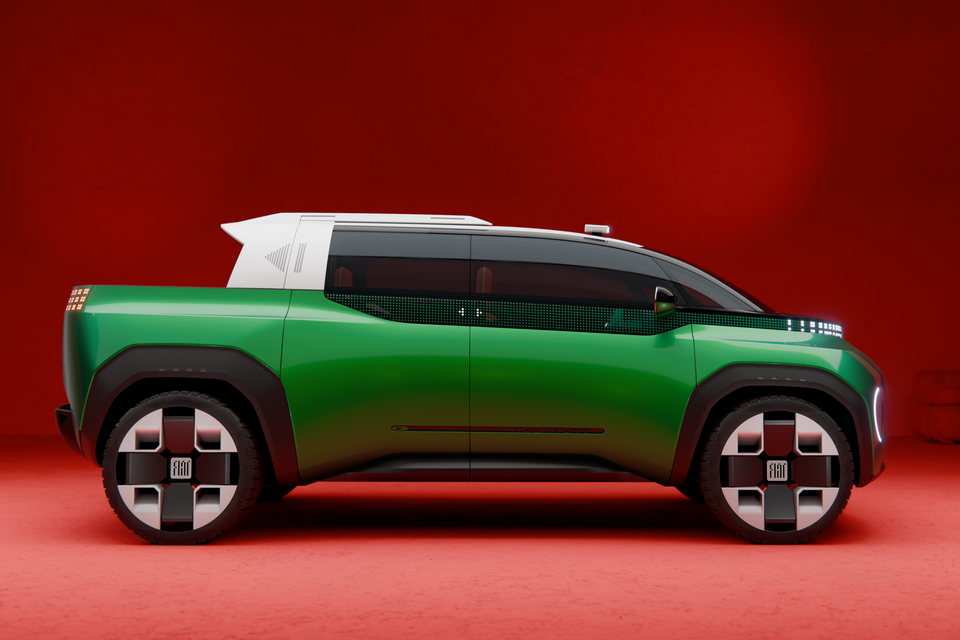
With European sales up 20 per cent so far this year, Fiat showed an updated Topolino concept alongside Multiplina and Multiplay show cars and a raft of new models at the recent Paris motor show.
Mr Belloni’s comments follow criticism that the growing number of safety systems needed to achieve a five-star rating adds weight, cost and complexity to new vehicles, driving up showroom prices.
Euro NCAP acknowledges the cost implications, pointing to budget brands such as Renault-owned Dacia, which makes a conscious decision not to aim for five stars. Its three-star Duster is sold here as the Renault Duster.
“Dacia is clearly a brand that doesn’t aim for five stars; they want to be at the budget [end of the market], but they will aim for three stars, and what you will see there is it is significantly better than [mandated] regulation,” Mr Schram said.
“But they made some clear choices to not put this [or that safety] system in because it’s really expensive.”
MORE: ANCAP awards five-star safety ratings to Chinese trio, but dings two for lack of physical buttons
Research cars in our Showroom, compare your options or let our New Car Specialists do the running around to find you a great deal.
Damion Smy is an award-winning motoring journalist with global editorial experience at Car, Auto Express, and Wheels.
Damion Smy
3 Hours Ago

Tace Clifford
3 Hours Ago

William Stopford
3 Hours Ago
Damion Smy
4 Hours Ago
William Stopford
6 Hours Ago

Ben Zachariah
20 Hours Ago
Add CarExpert as a Preferred Source on Google so your search results prioritise writing by actual experts, not AI.