


2027 Chery Q review: Quick drive
Chery’s small electric hatch is heading to Australia in 2027. It has plenty of cabin space and promising road manners, but price will be crucial.

Introduction
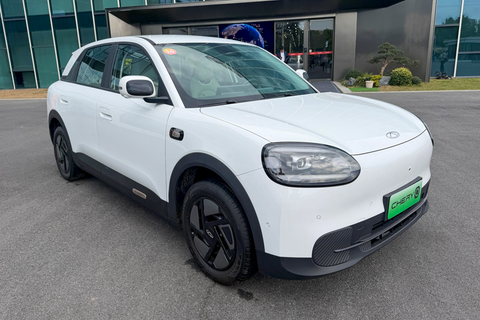
The Chery Q is a small electric hatchback with a surprisingly useful back seat. If the Chinese brand gets the price right when it launches it Australia next year, it could make a very good first EV.
CarExpert spent about three hours driving the Q in China recently, mostly on highways but also with a few opportunities to try some bends, so this is an early drive impression of an overseas-spec version – a full Australian road test will have to wait.
The Chery Q is expected to reach Australian showrooms in 2027, joining an increasingly competitive group of small electric cars on sale. Local prices and specifications are still to be announced, but it will need to take on the Geely EX2 and BYD Atto 1.
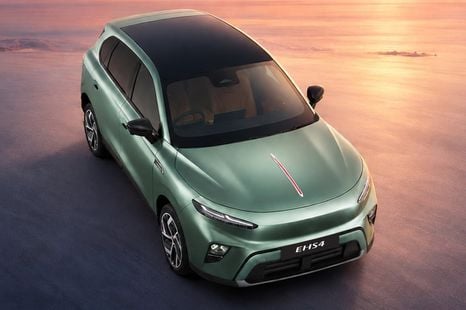
Its styling is fairly generic, but we think it looks good. In person, we’d take its appearance over the EX2 or BYD’s larger Atto 2 small SUV. More importantly, it feels spacious enough to do the family runabout job without requiring a much bigger car.
How much does the Chery Q cost?
We’d like the Q to start in the low $20,000s, but Chery hasn’t announced an Australian price yet.
The Geely EX2 currently starts at $26,490 before on-road costs for the Complete variant, rising to $30,990 plus on-roads for the Inspire. They offer claimed WLTP ranges of 252km and 345km respectively.
The smaller BYD Atto 1 has list prices of $23,990 plus ORCs for the base Essential and $27,990 plus ORCs for the Premium, with respective WLTP ranges of 220km and 310km.
However, BYD is currently offering the Atto 1 Essential for just $19,990 drive-away. That limited-time offer applies to eligible orders placed by December 15, 2026, and delivered by December 31, so it shouldn’t be assumed to remain available when the Q arrives here.
The Q’s extra cabin space will need to help justify any price premium over the smallest alternatives.
What is the Chery Q like on the inside?
The second row is the highlight. There’s a lot of legroom, and it feels closer to what we’d expect in a mid-size SUV than a small hatchback.
Four adults could comfortably travel in this car. For two adults and two children, there’s enough room for it to be more than an occasional second car.
The dimensions help explain why. The Q measures 4195mm long and 1811mm wide on a 2700mm wheelbase. It’s only 60mm longer than the EX2, but its wheelbase is 55mm longer. Compared with the Atto 1, it has an extra 200mm between its axles.
Chery quotes 375 litres of boot space, expanding to 1450L with the rear seatbacks folded, plus a 70L storage compartment under the bonnet.
Up front, the layout is familiar territory for a modern Chinese EV, with a large central infotainment touchscreen and a separate digital instrument cluster. Chinese-market entry grades have 8.0-inch instruments and a 12.8-inch touchscreen, while higher grades step up to 8.8-inch instruments and a 15.6-inch touchscreen. Australian equipment will be detailed closer to launch.
Either way we’d change the instrument display. The speed readout is pushed to the left, while a graphic showing the car and its surrounding traffic occupies the centre. That allocation of space makes little sense and we’d much rather see the speed given greater prominence.
Phone charging also needs attention. It was slow in the car we drove, which had both USB-A and USB-C outlets. We’d replace the USB-A socket with another USB-C outlet and give both of them useful charging speeds. That would be particularly welcome in a car aimed at younger buyers.
| Dimensions | Chery Q |
|---|---|
| Length | 4195mm |
| Width | 1811mm |
| Height | 1568mm |
| Wheelbase | 2700mm |
| Cargo capacity | 375L – rear seats up 1450L – rear seats folded |
What's under the bonnet?
Known as the QQ3 in China, the Q has two main battery options in its home market, both using lithium iron phosphate chemistry, plus a single rear-mounted electric motor. The figures below describe the Chinese-market QQ3 range and aren't confirmed Australian specifications.
| Specifications | Chery QQ3 29kWh | Chery QQ3 41kWh |
|---|---|---|
| Drivetrain | Single-motor electric | Single-motor electric |
| Battery | 29.48kWh lithium iron phosphate (LFP) | 41.28kWh lithium iron phosphate (LFP) |
| Power | 58kW | 90kW |
| Torque | 90Nm | 115Nm |
| Drive type | Rear-wheel drive | Rear-wheel drive |
| Weight | 1275kg | 1360kg |
| Claimed range | 310km | 420km |
| Max AC charge rate | 3.3kW | 6.6kW |
| Max DC charge rate | TBC, 30-80 per cent in 16.5 minutes | TBC, 30-80 per cent in 16.5 minutes |
Those 310km and 420km range claims are based on China’s more generous CLTC test cycle. They should not be compared directly with the WLTP figures quoted for the Australian EX2 and Atto 1. Local battery specs and WLTP range figures are still to be confirmed.
We’d welcome an 11kW on-board AC charger. The Australian-market Atto 1 has that capability, although both EX2 grades are rated at 6.6kW. The Q’s eventual local specification will determine where it sits in that regard.
Chery claims a DC fast-charge from 30 to 80 per cent takes 16.5 minutes. That's a narrower charging window than the 10-80 per cent figure often quoted for EVs, so these times need to be compared carefully. A peak DC charging rate is yet to be announced for Australia.
We didn’t conduct a charging time test or establish a measured real-world range on this drive. Those numbers will matter when assessing whether the Q can serve as an only car, particularly for buyers who regularly head out of town.
In terms of suspension, there are MacPherson struts up front and an independent multi-link setup at the rear. Chinese versions ride on 16-inch wheels as standard, with 17s available on the top grade.
How does the Chery Q drive?
For a small hatch with a budget brief, the Q drives pretty well. The steering is very light, which should suit its likely use around town, though there wasn’t enough cornering in our route to make a detailed assessment of its handling.
The suspension was reasonable overall, perhaps a little firm at times. China’s smooth roads can make the occasional small bump stand out, so we’d want to try it on rougher Australian surfaces before drawing a firmer conclusion about ride comfort.
One thing we would leave off is the roof rack, unless there’s a specific need for it. The rack-equipped car we drove generated noticeable extra wind noise, undoubtedly increasing aerodynamic drag and energy consumption.
Further assessment will have to wait until the Chery Q arrives Down Under next year.
What do you get?
Australian specifications have yet to be confirmed, but the following equipment is available across the Chinese-market QQ3 range, either as standard or optionally.
2027 Chery Q/QQ3 EV equipment highlights (overseas specifications):
- 16-inch alloy wheels
- Automatic LED headlights
- LED tail-lights
- Heated, power-folding side mirrors
- Power tailgate
- Keyless entry and start
- Surround-view camera
- Transparent chassis view
- Front and rear parking sensors
- Leatherette seat upholstery
- Leather-wrapped steering wheel
- Heated steering wheel
- 6-way power-adjustable driver's seat
- Heating
- Ventilation
- Memory
- 4-way power-adjustable passenger seat
- Heating
- Ventilation
- Memory
- 8.8-inch digital instrument cluster
- 15.6-inch touchscreen infotainment system
- Apple CarPlay
- AI-powered voice assistant
- Over-the-air software updates
- 50W wireless smartphone charger
- 6-speaker sound system
- Multi-colour ambient lighting
- Rear air vents
Is the Chery Q safe?
Available overseas driver-assistance systems include autonomous emergency braking, adaptive cruise control, and lane-keeping assistance. Australian safety specifications and an ANCAP rating are still to be confirmed.
How much does the Chery Q cost to run?
Chery Australia currently offers a seven-year, unlimited-kilometre vehicle warranty for normal private use, alongside eight-year, unlimited-kilometre coverage for its high-voltage EV batteries.
However, the Q’s specific warranty and servicing details have yet to be announced for Australia.
CarExpert’s Take on the Chery Q
The Q’s rear-seat space gives it a strong start. It looks good, drove well enough on this first acquaintance, and could make a very useful second car for a family wanting an affordable way into EV ownership.
It could also work as an only car for someone who doesn’t cover big distances each week, provided the eventual Australian range figure and their charging arrangements suit. We wouldn’t dismiss it as too small for that job.
Price will decide a lot. In the low $20,000s, the Q would deserve serious attention. If priced higher, it will need to justify itself alongside increasingly capable and keenly priced alternatives.
We’d like a more sensible instrument layout and better USB charging before the Chery Q arrives here.
Beyond those irritations, there’s plenty to like about a small EV that gives its rear passengers this much room.






 Automotive Vehicle Spec Data & 4K images Powered by JATO Dynamics Ltd